Sunday, February 06, 2022

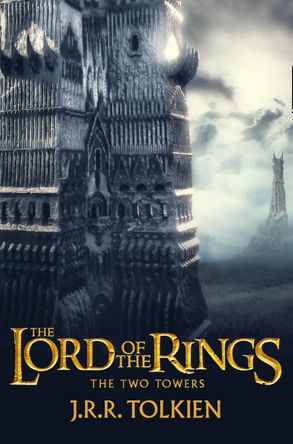
Finished: The Two Towers by J. R. R. Tolkien (from The Hobbit / The Lord of the Rings Box Set by J.R.R. Tolkien)  I'm going to try to post the review within the next day or so.

Weekly Reading Vlog #46: Herodotus p.424-426, Exodus 21-29, The Two Towers p.876-960, Tik-Tok of Oz


(Weekly Reading Vlog)


Books (110 pages this week)
The Histories by Herodotus p.424-426 (2 pages) 
Tik-Tok of Oz by L. Frank Baum p.880-886 (finished) (reviewed) (from The Complete Stories of Oz) (6 pages)
The Book of Exodus p.82-92 (Exodus 21-29) (From The Bible) (10 pages)
Tieng Viet 123: Vietnamese for Beginner p.10-11 (not yet complete.  Still studying.  Audio HERE.  Supplemental Audio HERE)
Podcasts and Audiobooks: (Not mentioned in the video)
Revolutions Season 3: The French Revolution 2nd Listening From: 3.31- The Man of Blood Part Deux To :3.34a- The Republican Calendar (from Revolutions Podcast)

For more information about what this is and why I'm doing it, see HERE.

Saturday, February 05, 2022

Friday, February 04, 2022

Thursday, February 03, 2022

Vietnamese Alphabet 


My Vietnamese studying continues to have its ups and downs.  After having stalled out for several months (close to a year), I'm trying to pick up again with Tiếng Việt 123: Vietnamese for Beginner.  However, I've hit a snag in this book very early on.  On pages 10-11, the introduction to the Vietnamese alphabet, the audio that accompanies the book (available online HERE) only pronounces the names of the letters of the alphabet, but not the example word.  (The example word is in the textbook, but not in the audio.)
This was an omission, I thought, so I had my wife record a version with both the name of the letter of the alphabet and the example word.
To my mind, this is a useful supplement to the book--filling in a gap that the publishers themselves had neglected--so I'm trusting I won't get dinged for copyright infringement.

Wednesday, February 02, 2022

[Update February 16, 2025:  The video featured in this post has now been deleted.  For more information, see this post here, in which I explain why I deleted it.]

Yabakei Dam (Yabekei Town, Oita Prefecture, Japan)


Yabakei Playlist HERE:


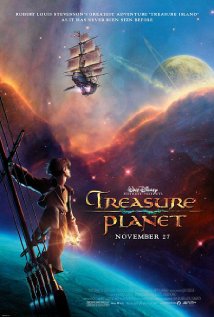
Treasure Planet: Movie Review (Scripted)


Video version of an old post (as I explained about HERE)
For the original post, see:

For the Avclub review I mentioned in the video, see: https://www.avclub.com/treasure-planet-1798198102

I enjoyed this video because it touched on a lot of themes I'm currently encountering in The Lord of the Rings  

FFS Week 1: The Seven Signs of Classical Fantasy!


On the racism question: I'm reading Lord of the Rings now and it strikes me that the Orcs are treated like the Amalekites--that is, killing them all to the last one is framed as an unquestioned good.  I go back and forth on whether this is something I should be bothered by, or whether this is just part of the genre
I've actually expressed concerns about this before.  In my review of The Hobbit, I mentioned
 From Chapter 18 (p.335)
"Then dismay fell on the Goblins and they fled in all directions. But weariness left their enemies with the coming of new hope, and they pursued them closely, and prevented most of them from escaping where they could. They drove many of them into the Running River, and such as fled south or west they hunted into the marshes about the Forest River; and there the greater part of the last fugitives perished, while those that came hardly to the Wood-elves’ realm were there slain, or drawn in to die deep in the trackless dark of Mirkwood. Songs have said that three parts of the goblin warriors of the North perished on that day, and the mountains had peace for many a year."
It's taken for granted throughout the whole book that killing a goblin is always good, but this passage about pursuing into the forest and swamp until they've all been slain reminds me a bit of the Old Testament injunction to hunt down and kill all Amalekites.  
Is this problematic morals, or is this okay because irredeemably evil monsters are just part of the fantasy genre?  I'm on the fence.
And in regards to what Steve said in his video about how the characters' race is usually used in place of characterization, In my review of  The Fellowship of the Ring, I said:
The character development in this book isn't great, is it?  I'm not entirely sure what the difference between Merry and Pippin is.  They seem pretty interchangeable.  I'm not sure if Legolas will get more developed as the series goes on, but he doesn't really seem to have much of a character in this book except as "elf".  Aragorn doesn't really have much of a character.  I mean, right on down the line, none of these characters really have that much of a personality to distinguish them from the rest of the crew.

Oh man, this episode was so good.  There was so much fascinating stuff in here.
It is, for better or for worse, an episode that needs to be listened to careful, because the politics of this whole thing are starting to get really confusing.  I did my normal thing where I listened to this podcast as I was puttering around on my computer and also on my exercise walk.  I think I absorbed most of it.
This episode covers a lot of ground.  (As usual with the episodes in this series, the title really only indicates a fraction of the content.  It is about the end of World War I, but it's also about 100 more things as well.)
I'll make some random observations below:
* The dissolution of the old empires at the end of World War I should almost have been its own episode.  As Mike Duncan says, this is the fulfillment of the Revolutions of 1848.  Since Mike Duncan devoted a whole season of Revolutions Podcast to 1848, I almost feel like he should have devoted a full episode to its fulfillment at the end of World War I.  And yet at the same time, I'm glad he didn't.  The narrative needs to keep moving.

* Interesting that the Treaty of Brest-Litovsk is now dead.  (I had always kind of wondered what had happened to this treaty after the end of World War I, but had never known for sure.)  This humiliating treaty is always emphasized in every history of the Russian Revolution, it had always seemed like such a big deal.  I had never realized it was only ever in effect for 8 months.  Kind of makes you think that all that emphasis is over-blown.

* Interesting also that now that Brest-Litovsk is dead, the Bolsheviks seem intent on re-conquering the Russian Empire.  Mike Duncan adds some nuance here by saying that there is a both an ideological explanation for this and a cynical explanation.
Although, something I remember from my college course on modern Chinese history is that the Chinese were very impressed by the Bolshevik willingness to renounce territory conquered under Tsarist imperialism.  This was something I remember the professor emphasizing in class, and also something I mentioned in my term paper: The Formation of the Chinese Communist Party.  To quote myself: 
It was the Russian Revolution that brought Marxism to the attention of China. Lenin’s twisting of Marx now allowed the theory to be applied to pre-industrial nations, and his writings on imperialism appealed to the Chinese, who were victims of imperialism. More importantly, the Chinese were impressed by the policies of the new Soviet Union (Schwartz 7-8). On July 25, 1919, the Soviet Union formally announced its plan to return the Chinese Eastern Railroad to the Chinese people, as well as giving up any concessions enjoyed by the Czarist government. The Soviets also pledged to help the Chinese in their struggle for freedom. Within less than a month, over thirty important Chinese organizations expressed thanks to the Soviet Union (Houn 16). In contrast, at the same time the Chinese experienced continued exploitation by the rest of the Western powers, most evident at the Paris Peace Conference. This caused many Chinese to become disillusioned with the capitalist powers (Houn 15).

Maybe Mike Duncan will get to this part later?  It looks like this happened in the summer of 1919, and at the moment he's still wrapping up the fall of 1918.

* Also interesting to hear Mike Duncan talk about how Bolshevism had some support among the leaders of the Western countries during this time.  This is not how the story is told in socialist circles.  (We're taught that the Western governments were controlled by the capitalists, who were against the Bolsheviks from day 1.)  But undoubtedly there were a lot of intellectuals who supported the Bolshevik cause in the early days, and I guess I can imagine there might have been some government officials among them.  Reading ahead a little bit, it doesn't look like the Red Scare started until 1919.  This is another thing I hope will get fully covered in future episodes.   (Emma Goldman and Alexander Berkman were deported back to Russia during this time, so I hope that gets covered as well--looking at Mike Duncan's bibliography, it looks like he's planning on covering this.)

* I am super psyched to hear that next week's episode is going to cover the Revolution in Germany.  I had been hoping that Mike Duncan would devote an episode to this.  As Mike Duncan mentions, what was going on in Germany is crucial to understanding what the Bolsheviks were thinking, so its fitting that it will get its own episode.  And besides that, it's just a really - fascinating - story.  Looking forward to next week.

Tuesday, February 01, 2022


Original tag by Tom LA Books: https://youtu.be/dhMwepFp9DQ
I was tagged by Dane Reads: https://youtu.be/8pzBVziBG-A
----------------------
QUESTIONS:
----------------------
1.“I just fell out of bed, found out what key I had dreamed it in… and I played it”, Paul McCartney (about “Yesterday”).  
A book that you dreamed about or that inspired one of your dreams. 

2.“Lucy in the Sky with Diamonds”, John Lennon  
A book that talks about drugs or that was written under the influence of drugs.

3.“We thought we'd be really big in Liverpool”, Ringo Starr.  
A book about someone who had far more success than what they expected, or a book that was much more successful than what the author expected.

4.“Sitting on a cornflake / waiting for the van to come”, John Lennon. 
A surreal book (or a book with some surreal elements) that you enjoyed. 

5. The White Album. 
A book you loved that:  a. has a minimalist cover, or b. is written in a minimalist style. 

6. "Little darling, it’s been a long cold lonely winter / Here comes the sun”, George Harrison.  
A book of poetry that you found uplifting.

7. A day in the life.
An experimental book that’s very uncommon for its content or format, and yet it works well.

8. "Over half of Americans who are 45 and older attribute the Beatles’ split to Yoko Ono".
A book about a woman (or, if you can’t think of one, a man) who is unjustly blamed or accused of something. 

9.“Limitless undying love which shines around me like a million suns / And calls me on and on across the universe “, John Lennon.   
A book that opened your mind and made you think of the universe in a new way, either physically or spiritually.

10. “Mother Mary comes to me, speaking words of wisdom, let it be”, Paul McCartney. 
A book that you found very powerful and moving despite its apparent simplicity.

I tag:
jim's books reading & stuff: https://www.youtube.com/c/jimholroyd

Links to my reviews of some of the books I mentioned: 


The Roots of French Imperialism in Eastern Asia by John F. Cady http://joelswagman.blogspot.com/2011/07/roots-of-french-imperialism-in-eastern.html


I got my information muddled about The Story of Ferdinand.  It was originally written in English by an American author.  See Wikipedia here: https://en.wikipedia.org/wiki/The_Story_of_Ferdinand

My tag playlist HERE: