Monday, May 18, 2009

Kokonoe / 九重

(Better Know a City)

Monday, May 11th, 2009
Not all Cities on this project are created equal. The previous city, Musashi I felt like I was really struggling to spin out the clock and make it to the end of the day. Kokonoe, by contrast, was one of those cities that was overflowing with things to see, and I felt like I had just gotten started when the day finished. I probably could have used another whole day in the Kokonoe to feel like I did the place justice, but for now this entry will have to do.

This was not my first encounter with Kokonoe. I had spent a few afternoons there back in my JET (W) days.

On afternoon in particular sticks out in my mind. Way back in spring 2003 I was doing an Earth Day clean up at mount Kuju with the Oita Earthman club.
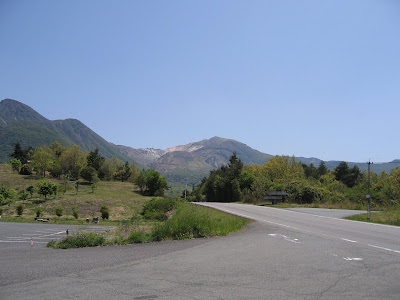
The mountainside was absolutely beautiful in the spring. In fact, as we drove through the winding mountain roads of Kokonoe it was all green mountains covered with grass and wild flowers, interspersed with rivers and occasional waterfalls. I remember thinking it was one of the most beautiful places I had ever been to.

On a less laudatory note, Kokonoe is also home to Shinrin Ski park, where I went with a group to go skiing back in winter 2003.
Kyushu is far enough south that it isn't famous for it's snow, and the skiing here is limited. Shinrin Ski Park is the only ski area in Oita prefecture, and one of only 3 ski areas in all of Kyushu. So, on one hand you do have to give them credit for trying. But it was the worst day of skiing I ever paid money for.
After paying about $50 for a half day (4 hour ticket), we discovered that the place was so crowded it took an hour just wait through the lines for the chairlift to get to the top of the mountain. And once we were at the top, it took us only about 30 seconds to ski down. By the end we discovered we could make better time hiking up the mountain.

Both of those trips were (how time flies) over 6 years ago now.
Since my last trip to Kokonoe, they've built a new suspension bridge there, which has become the talk of the prefecture. A couple years ago many of my students began telling me excited stories about how they had gone to Kokonoe to see the bridge. I didn't understand why this was such a big deal, but apparently it was.

So, this past Monday I set off to re-visit the beautiful mountains of Kokonoe, and to try and see if I could find out why this bridge was such a big deal.

From Nakatsu, it took me about 2 hours to drive down to Kokonoe, so it was shortly after 9 by the time I arrived.
My first stop was the town hall, where I picked up some maps and pamphlets.

Even though I thought that this new bridge was probably just a glorified tourist trap, I decided to make it my first stop and get it out of the way.

20 minutes and a few wrong turns later, I was headed to the bridge. (There were several signs pointing the way to the bridge, but they tended to be mostly on the side of the road and easy to miss. The bridge is apparently still recent enough that they haven't incorporated it into the official overhead road signs, which is what I usually rely on.)

The road wound back and forth as it led me through a valley (what is known as Kyusuikei Gorge) and then up the side of the mountain.
On the way up the side of the mountain, there was a tea house with a big waterwheel next to it, and a large parking lot for a scenic overview. It looked familiar, and I recognized it as a place I had stopped before 6 years ago with the Earthmen club, so I decided to stop here again.

The view from the scenic overview was absolutely astounding. As always my pictures don't do it justice.
Behind the waterwheel was a waterfall called (I hope I'm reading the Kanji right here) "Tengu waterfall". And it was also beautiful. There was so much mist shooting up from the waterfall I had trouble getting a decent picture, but hopefully this gives you an idea. (There were also two giant sandals next to the waterfall that people could pose next to. I have no idea why).

Inside the tea house was a balcony where you could get another view.


After walking around this area and trying to soak in the view, I continued on to the bridge: the famous Konokonoe "Yume" Otsurihashi.

You could tell this was a main tourist attraction. The whole area was run like an amusement park. As soon as you turned into the parking lot a series of uniformed parking attendants in white gloves directed you to exactly the parking space they wanted you to take. There was a big booth selling tickets, and a several restaurants and shops nearby.
And the entrance to the bridge was walled off by a huge fence and guards outside to make sure no one could get in without a ticket. (I don't know if fence hopping is a problem at a suspension bridge.)

I thought I would avoid the crowds by coming on a weekday, but there were still plenty of people there. I can only imagine what this place must be like on a weekend or holiday. (Thank goodness I avoided this place during Golden - Week).

I bought my ticket for 500 yen ($5) and went across.
Before coming to this bridge, I had heard stories from my students like, "It was so scary. It was so high up and you could see down through the grating, which made you feel like you could fall down through it. And the bridge swayed back and forth in the wind."
Reports like these had made me imagine a sort of open jungle bridge like you might see in the "Temple of Doom" movie. But reports of this bridge's scariness were greatly exaggerated.

There was a small metal grating in the middle, but on both sides of this was a concrete walkway. The bridge did sway a bit when you walked on it (I thought it was more from people's steps than the wind, but it probably sways with the wind too on blustery days) but it was nothing at all scary. And as bridges go, it wasn't even exceptionally high up. I've walked over a lot higher in my time. I'm usually very sensitive to heights, but this bridge didn't bother me in the least. I can only conclude that all my students were wimps.

There were enough people crossing the bridge in both directions that you walked through at a snail's pace. From the bridge, you had a great view of the Kyusui Ravine down below, as well as the two Shindo waterfalls (what are called the O-daki and Me-daki, which means man and woman waterfalls respectively).

Before getting on the bridge there were a couple scenic overlooks to take pictures of the bridge. And, on the other side of the bridge, there were signs for several different scenic overlooks. I walked up to all of these, and got various pictures of the bridge from different angles.


Of course, to get back to my car I had to cross the bridge in the other direction. (There were signs warning you to hang onto your ticket so you could get back across).

And then I got back into the crowd and plodded back very slowly across the bridge again.

There was an information office by the ticket booth. Before going across the bridge, I had ducked in there to see if I could find some more English pamphlets and some advice about sight-seeing in Kokonoe. To my surprise, when I walked in the door I saw a young Japanese woman and a Caucasian man behind the desk. Both of them were busy at the moment, so I had left. But now that I was back across the bridge, I thought I would pop in a second time and take advantage of the fact that they had a foreigner working there to get some sight seeing hints in English.

The gentlemen turned out to be a fellow American, and he was very friendly and helpful. I asked him what else there was to see in Kokonoe, and he showed me the map. "There are a lot of really beautiful hot springs up near Kuju mountain," he said. He pointed several of them out to me, and we also chatted briefly about what we were each doing in Japan.
Then he said, "Hey, I get off for lunch in 5 minutes if you want to stick around and catch lunch."

"Sure," I said. "Although I didn't bring anything with me."

"It's okay, they make really good burgers at the place next door. I'll met you over there."

The hamburger was quite good. (I think it was a Kokonoe speciality). Although, and this is unusual in Japan, it was one of those burgers that was so big you couldn't possibly get your mouth around it. So you just had to cram it in your face as best you could and bit off some of it, and then wipe off the barbecue sauce that was dripping down your chin. Not a very dignified burger, but a tasty one.

My new friend joined me shortly, and I quizzed him about the bridge.
"Now be honest," I said. "This place is pretty much just a tourist trap."

"Oh yeah," he said. "It's totally a tourist trap. But you know how the Japanese are, they love tourist traps.
"It's funny," he continued, "when foreigners come here they always ask, 'But what is this bridge for?' And I tell them, 'just for tourism'. But it's been enormously successful. The city took out a 20 year loan to build the bridge, and they were able to repay it back in just 2 years."

The conversation went onto other topics. We talked about our respective life stories, and what we were doing in Japan. He told me the series of events that had led to him having the rather unusual job of being the only foreigner working at the Otsurihashi bridge information center. I recounted my experiences working through various - jobs - in Japan over the years. Eventually we even began talking about our faith in God and our respective religious journeys.

One of the nice things about Japan is that you make friends quick. Sure, I've been snubbed a few times, but on the whole most other expatriates you met are really friendly people.
If we were both back in America, I would have walked past this guy without thinking twice. But since we were both expatriates here in Japan, we immediately have something in common and end up eating lunch together. And I'll probably never see this guy again in my life, but it was a good conversation for the hour it lasted and I was happy to have met him.

He had an hour off for lunch, and it went fast. We talked all the way through it, and before I knew it he was saying he had to return to work.

He gave me one final piece of advice to turn left on the road leaving the parking lot, and continue on to the Handa plateau where he said there was lots of beautiful scenery. So I did.

And he was absolutely right.
Although as I drove down the road, several of the mountains looked familiar and I realized I had been here before in the past, but I had forgotten about it.

What can I say? The Handa plateau is absolutely amazing. Green fields surrounded on all sides by a rolling green mountain range, including Mount Kuju, the highest mountain in all of Kyushu (I think).

The view is so amazing that I stopped the car several times to try and capture it on film, but I'm afraid I couldn't do it justice.


There was a small park I stopped to by the side of the road that had a shrine built there. The sign indicated this park was somehow related to famous Japanese novelist Yasunari Kawabata (W), but unfortunately my limited Japanese prohibited me from reading much further. Even if I didn't understand the significance of the shrine it was, nonetheless, an amazing view from all four sides.


I continued down the Handa plateau to the foot of Mount Kuju.
Near the base of Mount Kuju there were several parking areas, visitor centers, and restaurants.

There were also a couple of grassy fields on which you can walk through on a raised wooden platform: the Chojabaru and Tadewara marshland. (They're called marshlands, but they seemed just like green grassy fields to me. Maybe if I had been there during rainy season it would have been different).

But, I always enjoy a good walk over some wooden planks, so I walked the loop over both marshlands.


The hiking entrance to Mount Kuju was also in this area.


It was tempting, but it was already getting close to 3. I knew if I started the hike now, that would be the rest of my day right there. And I had the sense that there was so much in Kokonoe left to explore.

(I had already done the Kuju hike before anyway, way back during my JET days. It had been so foggy that day that the higher up we got, the less we could see. One friend and I ended up coming down the wrong side of the mountain and ending up in a different town than everyone else. Fortunately we all had cell phones so we called them and had them pick us up.
The sky was crystal clear today and it would have been the perfect day to do the hike if I had had the time. Alas. Since Mount Kuju actually boarders several towns, maybe I'll catch it on another day.)

In order to scratch my hiking itch I decided to take some smaller trails instead. I started out on the Amagaikegoe trail, which after a while changed over to the Bougatsuru trail.
The trail was 4 kilometers and was supposed to take one hour. I wasn't sure I wanted to spend a whole hour on it, so I just walked it for a ways until I got sick of it (about 2 kilometers in) and then I turned around and headed back.


I headed back in my car and went down the Yamanami highway--not really a highway in the American sense, but a beautiful road that has some great views driving down it.

As my American friend had indicated, this area was filled with Onsens--Japanese hot springs for public baths. There were tons of signs for Onsens everywhere, and more than once I followed signs down a road thinking it was leading to a sight seeing area only to end up at a onsen.
I'm sure most of these outdoor onsens had very scenic views. (The Kokonoe pamphlets made sure to emphasize as much). But again I didn't to waste time spending an hour soaking in the tub when there was so much yet to be seen.

Instead I began stopping at all the little tourists spots along the way. For instance I stopped at Yamanami tourism farm, a little touristy area where you could walk around and see the various farm animals and feed them.
As you would expect, there were a lot of families there. It also appeared to be a bit of a couples spot as well. It was a little boring by myself, but since it was free I did a walk around once through the path. I went around the little pond they have there, past their blueberry hill (a blueberry orchard on a hill), and I said hello to all the sheep, rabbits, dogs, goats, ducks, and horses.


A little further up the road was the Kuju Natural Zoo.
Unlike the farm, this unfortunately was not free. As I drove up to the gate I was asked to pay 1,000 yen ($10), which I thought was a bit of a rip-off, but what can you do.

I parked my car and went through the gate.
At this zoo many of the animals are allowed to roam freely, and I was immediately surrounded by about 4 llamas who looked at me expectantly.
I wasn't sure if I was supposed to pet them, feed them, talk to them, or ignore them.
It turned out that there was animal feed you could buy at the front gate. The animals know this, and so they cluster around every new visitor expectantly.
I, in my usual oblivion, had somehow managed to walk past right past the animal feed without even noticing it.

Not to worry though. There were various vending machines throughout the park at which you could buy more animal food.
The animals in the zoo were for the most part extremely ordinary animals and not that different from the farm I had just come from: horses, sheep, goats, pigs, et cetera.
There were a few non-farm animals mixed in, such as the aforementioned llamas, deer, Emus, American Buffalo, and others.

Most of these animals were in their cages, but some of them were roaming the park free. (I'm guessing they must be on some sort of rotation).

The zoo was pretty deserted. I was the only customer there at the time. (Granted it was a weekday afternoon).


As always happens when you get to see real animals up close, you discover they're not quite as cute as they are on TV. In fact if I had to choose one word to describe most of these animals, it would be "mangy". Their fur was spotchy and missing in patches, and they also had dirt and straw matted into their fur coats. Many of them were surrounded by a small swarm of insects, and after touching one of them my first thought was that I couldn't wait for an opportunity to wash my hands. (I know, I'm a spoiled suburbanite who doesn't have a lot of experience with farm animals).

After the zoo, got back in my car and drove down the road until I got to Asahidai, another scenic overlook.


It was after 5 by this time, but there was still daylight so I decided to see what else I could see. I drove back and forth on the roads some more. I stopped at Lavender Park.
It didn't look very Lavender to me, but I probably hit it in the off season.
Nonetheless I went up on top to get a view of the park below, and, as with every place in Kokonoe, the mountain ranges surrounding it really made the spot.


Although there was no sign posted about a closing time, it was clear Lavender park was gearing down. I was the only one walking through the flower garden, and besides mine there was only one other car in the parking lot.
Alongside the garden was a small restaurant. A little old lady walked out of the restaurant, glanced at me up on the hill, looked at my car, and then drove out and closed the chain fence behind her.

There was a moment of panic, when I thought I'd been locked in for the night. (More so than in the US, Japanese parking lots are notorious for locking up the entrance after closing time. I had the unpleasant experience once of having my car locked up in a city that wasn't my home, and was only able to get back because a friend generously loaned me his car. After that I've always tried to be careful).
Fortunately, however, in this case the chain fence was closed only by a hook, and not a lock. I was able to let myself out, and then, because I'm such a responsible person, I even stopped my car and came back to re-close the chain.

When I sat back down in the car, I heard a ripping sound. I had managed to split my shorts.
This is either a sign that I've been eating too many chocolate donuts lately, or that my shorts were getting too old. Either way it was a bit of a blow as these were the shorts I always wear when I'm out hiking, and the only pair I have with enough pockets to accomodate all my stuff. Ah...such is life.

The splitting of my pants was probably a good sign that I should call it quits, but I wanted to get in one more stop.
Unfortunately I never found it. I got lost on the roads for a while. I followed signs towards what I thought was a waterfall, but never found it. I drove North, I drove South, I ended up in Yufuin, and then drove back across Kokonoe back into Kusu. By now it was dark.
It was a bit of an anti-climatic ending, but all in all a great day of sight seeing.

Addendum: After consulting several maps, it turns out that Ryumon Waterfall is in fact inside the boundaries of Kokonoe. I had mistakenly included it in my entry on Kusu. In fact I had thought it was part of Kusu for years now. My mistake.
In case anyone forgot, below are the photos and video I took of Ryumon Waterfall last summer. For the entry from which these pictures were taken, and a description of the waterfall see my entry on Kusu here.


Video 1


Video 2


Kokonoe Links
Again, by comparison with Musashi city, in which I couldn't find a single link, I'm a bit spoiled for material on Kokonoe. I can't link to everything, but for starters:
Pictures of Kokonoe of Wikicommons--includes a view of what you see driving down Yamanami highway, something I wasn't able to capture on film because I was driving at the time, but this picture reproduces it pretty well
Kokonoe Town: A Chilling Experience,
Hosenji Hot Spring,
and Kyusui Ravine

Link of the Day
Noam Chomsky: Obama recycles George W. Bushs plans,
and House Approves War Funding Bill

Friday, May 15, 2009

Wagner: A Documentary Study edited by Herbert Barth, Dietrich Mack, Egon Voss

(Book Review)

I'm not still sure whether I'll ever go to grad school in 19th Century European history, or if I'll only just talk about it on this blog. But either way, I'm having fun making a reading project out of the idea.

The nice thing about carving out an area like "19th Century Europe" is it gives you an excuse to explore all of the interesting people within that period. And Wagner seemed to me an interesting person.

For example, Wagner was one of the leading figures in the Dresden 1848 Revolution in which he shared the spotlight with none other than Bakunin.

But of course contrasted with the "liberal-progressive-Wagner" is the "reactionary-Jew-hating-Wagner" who was appropriated by the Nazis.
Which is the real Wagner?

But politics aside, I think most people are primarily interested in Wagner because of his work with German mythology. (Arguable Wagner, along with Tolkien, is responsible for creating the modern fantasy genre).
I've been interested in fantasy and mythology all my life, and the idea of Wagner's "Ring Cycle" fascinates me.

I say, "the idea" fascinates me, because although I'm interested in the concept in general terms, I can't see myself sitting through 15 hours of German opera. A nice summary of the plot and maybe a short description of Wagner's influences will be fine, thank you.

To this end, I've been looking for a nice readable biography of Wagner.
And as far as I can tell, no such thing exists.
I've looked in bookstores here in Japan. I've looked in bookstores back in the US. And I searched Amazon. I can find several books on Wagner's music, and a few polemics about his political views (A) but not a straight forward biography.

If someone out there knows of a good biography, please recommend it to me. In the mean time, this is the best I've found so far. I found it at Oita library during my last trip into Oita City.

This book consists entirely of various documentary evidence about Wagner's life. For example it contains newspaper articles Wagner wrote, letters Wagner wrote to his friends, letters his friends wrote back, letters about Wagner that friends wrote to 3rd parties, and diary entries.

It sounds pretty cool, and I admit there are a few highlights here. The section on the 1848 Revolution contain a reprint of Wagner's newspaper editorial "Revolution" as well as Wagner's own account of what happened during the Dresden uprising, and Bakunin's appraisal of Wagner.

And I did learn interesting bits and pieces about Wagner's life from this book, but it was a poor substitute for a biography. It was just a series of fragments, and the reader had to guess at the gaps.

Moreover, most of Wagner's letters have to do with the techniques of music, which were unappreciated and uninteresting to an unmusical person like me.

I didn't find this book at all enjoyable actually. It was one of those books where I couldn't even get through a single page without my mind wandering off at some point.

I stuck through the entire book simply out of determination. (If I do go back to school someday, I'll probably have to read lots of boring things, so it's probably good to train my mind).

Still, I wouldn't recommend this book to anyone for pleasure reading.
(It was published back in 1975, so you probably won't find it at your local bookstore. But you never know, it might be in your library).

Link of the Day
Zack De La Rocha Interviews Noam Chomsky I linked to an audio file of this ages ago, but youtube has the visual as well.

Also, speaking of wasting time on Youtube, I've really been loving the Mark Steel lecture series. What a funny and entertaining way to learn about historical figures from Beethoven to Oliver Cromwell to Karl Marx.
I love having this on in the background when I'm puttering around the apartment.
Check out some of them on this playlist here. You won't be able to get through all of them in one sitting, but if you listen to it in snippets you won't be sorry.

...Also, remember when I wrote in this post comparing the George Bush administration to "1984"? Newly released information on torture methods reveals I spoke way way too soon.

Sunday, May 10, 2009

Musashi / 武蔵

(Better Know a City)

Monday, May 4th, 2009

This is my 3rd Golden - Week (W) entry (see also Oyama and Kunimi). And, as with the previous two posts, the name of the game during - Golden - Week is to try and beat the crowds.

So, I thought I would go out to Musashi, a tiny little town out on the Kunisaki Peninsula.

The day before I got a call from a Japanese friend wanting to go with me. "Well, if you want to," I said. "But I'm planning on going out to the middle of nowhere for the whole day."

She was a remarkably good sport about it. "It's no problem. You always sound like you have fun out on your expeditions, so I want to see what it's like."

We met up early in the morning, and drove out to Musashi town together. There was a light rain falling that morning, but according to my new rules we set out anyway to explore Musashi rain or shine.

Musashi was absorbed into Kunisaki city during the town mergers a few years ago, but the old town lay between Kunisaki town to the north and Aki to the South. Oita Airport is located right on the boarder between the two towns, and, although I included the airport in my entry on Aki, it seems to belong to both towns almost equally.

Shortly after crossing into Musashi we saw a sign for Furuichi beach, which we stopped at.

We were extraordinarily lucky with the rain. It stopped raining almost as soon as we entered Musashi, and did not start raining again until we were in the car driving home. But the sun never came really came out. Consequently the whole day had a grey and cloudy feel to it. The wonderful colors that I was so enraptured by on my previous trip to Kunimi never came out in Musashi.

We walked the length of the beach, and went out on one of the piers.


My friend was amazed by the same thing I had noticed the previous day at Kunimi--how clear and beautiful the water was at the Kunisaki Peninsula. "The ocean looks nothing like this in Nakatsu," she commented.

There was a splashing sound, and we saw a fish jump through the air and go back into the water. "Ah, a jumping fish," my friend said excitedly. "Do you have those in America?"

"I don't know actually," I said. "I don't think we have any in Michigan, but maybe by the ocean."
The fish jumped several more times as we walked down the pier. I wonder what makes a fish do that.

I collected stones by the sea and practiced skipping them on the ocean. My friend complimented me on my stone skipping ability. "Where did you learn to skip so well?"

"I don't know. I guess my dad used to show me at lake Michigan when I was a kid. But I was always terrible at it. I'm still terrible at it."
And I am. But, apparently compared to the average Japanese person I've got a bit of an edge. I guess we Michiganders must have a natural stone-skipping advantage when we go abroad.

After walking the length of the beach twice, we decided we had exhausted the area and got back in the car to see what other diversions Musashi had to offer. We got back on the coast road. Almost immediately after leaving Furuichi beach, we saw signs for another beach.
"That's got to be pretty much the same beach we just left," I said. My friend agreed, and we decided there was no need to stop there.

And then almost immediately after that, we crossed the town boarder into Kunisaki.
We were both a little shocked at how small the town was. (Usually the town boarders are designed so that it takes at least a little bit of time to drive from one end of town to the other).
"Well, actually come to think of it, Musashi did look pretty small on the map," I said. "The town only has a small stretch of coastline, but the boarders widen out as you go back into the mountains."
But was there going to be anything to do in the mountains?

"So I guess we have to head back now?" my friend asked.
Yeah, sorry, I explained. That's kind of the system I've got going for this project.

So we turned the car around and drove back into Musashi. And then we went to the second beach after all. It was called Ryujin beach and Uchida campground. (Or was that Uchida beach and Ryujin campground?) It was just slightly down the coast from the previous beach, but we still walked the length of it, and I skipped stones across the ocean again.


There was a small trail which lead through a wooded area filled with pine trees which we walked through just because it was there.


There were also some pavillions, under which 3 motorcyclists were resting. "Konnichiwa (W)" one of them called out to us.
"Konnichiwa" we replied.
"Are you sight seeing?" he asked.
"Yes."

The conversation ended there. I wondered if we should ask them what there was to see in Musashi, but my friend said they didn't seem like locals. "During Golden Week, people often go touring on motorcycles," she explained. "They're probably just passing through the area."

We got back in the car and headed towards the city center.
Musashi had a very small city center: a town hall, a couple supermarkets, a cultural center, and that was about it.

I also saw what looked like a church's steeple with a cross on top of it. "Hey, I wonder if that's a real church or a wedding chapel," I asked.
"We might as well stop and have a look," my friend said. "We've got nothing else to do in this town."
And so we did.

Although I lost my faith a long time ago, I still have a fondness for churches in Japan. Since only 1% of Japan is Christian, I always think it's kind of neat whenever I find a church, especially out in the countryside.
In my circle growing up in Grand Rapids, everyone went to church. So, in my limited experience attending church- in Japan, it was interesting to meet people who went to church inspite of the surrounding culture, and not because of it. (And I've talked to other lapsed American Christians who have had similar experiences of feeling a fresh and new atmosphere at Japanese churches despite their own lost faith).
Japanese churches also remind me of home a little bit, especially since most Japanese rural churches are designed like they're straight out of 1950s America: a white church with a steeple and cross on top.

However just to confuse things there are also a lot of "wedding chapels" in Japan, which are buildings designed to look like churches for the sole sake of holding marriage ceremonies for young Japanese people who want a wedding that resembles what they see in Hollywood movies. Several times I've approached what I thought was a church, only to find out it was a wedding chapel.

This church didn't appear to have a parking lot, so we parked the car by the side of the road and tried to walk up to it. It appeared to be hidden behind a number of other buildings, so we walked around the block while we tried to find an access point.


There were some dandelions by the side of the road, and my friend picked one up and blew the seeds into the air. "I was reading a book recently," she said, "by a Japanese professor who lived in America. And he wrote that, in contrast to Japanese, Americans actually hate dandelions and will try and weed them out from their yards. Can that really be true? In Japan, children love dandelions."

"Well, yes and no," I said. And I tried to describe the complicated relationship we Americans have with dandelions: how children love them, but gardeners hate them. Eventually this turned into a recounting of every memory I ever had concerning dandelions.
My friend listened attentively all the way through it. Maybe she was just being polite. But in Japan, every ordinary American memory is changed into an exotic recollection of a far away land, and in the past I've made big productions out of retelling some of the most ordinary things. (Such as the American ritual of praying before meals, and all the unwritten rules that govern praying etiquette).
While I was telling these fascinating stories, we were still trying to find the church. We went around one way to the right, and then we went around to the left, and we couldn't seem to get past the big building in front of the church, until we realized that big building was part of the church. The traditional chapel and steeple that we were focused on were just the second story of the church.
This meant that, counting both stories, it was one of the biggest churches I had seen in Japan. (Usually they're very tiny). And, here it was, out here in the middle of nowhere.


"You know a lot about Christianity," my friend said. "Without looking at the sign, can you tell me if this is a protestant or a catholic church?"
"No," I answered. "Sorry."

With this little diversion over, we drove on. And followed signs to the Tsubacki Hachiman shrine.
My friend translated the sign for me, telling me that this temple was original built way back in 765 AD. "Of course I don't think that's referring to the actual wooden building," she said. "These old temples are often built and rebuilt several times over. But the actual site dates back to 765."


There was a big tree by the entrance to the temple with an enormous trunk. Someone had tied a wreath of woven straw around it. "This is a Kusonoki," my friend said. "The old Japanese believed that divine spirits lived within the tree, so we put this ceremonial wreath around it. I guess that must seem pretty strange to a Westerner."

"No, actually ancient Greek and German myths were the same," I answered.


At the parking lot for the Tsubaki Hachiman Shrine was a map of Musashi with all the other sites of interest highlighted. We were glad to find this, because it gave us something of a plan for the rest of the day. True, almost everything on the map was just more temples and shrines. But at least we knew what we were doing now.

The first temple on the list was walking distance from where we were at. In fact it was just right behind Tsubakihachiman shrine: Shon Temple. We walked through it briefly.


But I was more interested in the small stream besides Shon Temple than the temple itself, so we walked down this stream for a way.


Following the stream, we came to a a group of rice fields alongside the stream.


Although actually many of them were growing barley instead of rice--something I didn't even notice until my friend pointed it out to me. And then she laughed at me for not even knowing the difference between barley and rice. (It was early spring so instead of being golden brown like in the beer commercials the barley was a series of green stalks, and from a distance looked the same as rice fields).

The hanging wisteria flowers (W), fuji in Japanese, were also visible. We saw a couple different gardens in Musashi, but they were also growing wild in the wooded areas around the rice (um, I mean barley) fields.

We followed the river on the way back, and marveled at the clear water, and could even see lots of fish darting around in its shallow streams.
Then my friend said something which slightly took the romance off this small countryside stream. "This is probably the water where the houses' water drains to. All the soap from the shower and dish-washing liquid goes in here. But the fish still seem to be healthy." Out in the Japanese countryside, without the intricate plumbing system of the big city, most of the water from the sink drains does run directly into the streams outside.

We came back to the car and, after consulting the map, deciding to head out to the viewing area by Ogi Mountain. This was a beautiful mountain view of the city. But instead of hiking our way up here, we could drive the whole thing.

We followed the signs up winding mountain roads for a while until we got to the top, and enjoyed the wide view of all of Musashi city (and much of Aki and Kunisaki) laid out before us.
The sky was still grey and gloomy, and, although it colored everything with a shade of blah, fortunately it did not hamper the view at all.

We stayed up there for a while taking in the view, and trying to capture it through a camera lens (always a futile effort).


The nearby map indicated some hiking trails, so we decided to explore that.
Slightly down the mountain was a parking lot by what was called "Ogikanzen bosatsu".
This was a small temple with a little bit of a loop through the mountain behind it.


As you went through there were a bunch of small Buddhist statues that were numbered in order (I think about 35 maybe) although I thought I caught some gaps in their counting. "Hey, this is 31 already. What happened to numbers 27, 28, 29, and 30?"

My friend, as a dutiful Buddhist, stopped to offer up a small prayer at each one.

It was a pleasant little hike. At one point we thought it had started raining again, but it turned out it was just the wind blowing through the leaves and sending down some of the morning's rainwater. The ground was a bit wet and slippery, and my friend did take a bit of a spill. I was worried that might mean the end of the hiking trip, but she recovered herself quickly, and we continued. (She was only a bit concerned that her new camera had gotten scratched up, but despite the outside being a little less new and shiny it still worked perfectly fine.)
"I've heard a lot of the hiking trails in Japan are old training routes for priests," I said. "With all the Buddhist statues on this trail, do you think this was a training hike?"
"No, it's much too small and easy to be for training," she said. "Something like this is for people who are suffering a misfortune or need a miracle. If they make the loop and say little prayers to each of the statues, then their request will be granted."

At the end of the loop there was another trail branching off to go to the viewing area we had just come from. "We don't need to go there," my friend said. "It just leads to where we've already been, and then we'll have to walk all the way back to the car again."
If I had been by myself, I would have gone just for the hike. But I decided to yield to my friend's logic on this one.

Since we didn't have a portable map with us, we drove back to the Tsubaki Hachiman shrine (it was on our way back down the mountain anyway) and looked at their map to plan our next move. There was something on the map about a green tourist village just down the road, but despite driving back and forth through that area several times, we never found it. We did stop at a small Fuji park to admire the flowers.


We drove up a little down the road to visit Saikoji Temple. As we got out of the car, my friend said, "This is a Zen Buddhist temple. I've never been to a Zen Buddhist temple before. But Zen Buddhism is very popular in America, isn't it?"
"Yes, I've got a few friends who are into it," I answered.
"Well, they'll probably be quite impressed when they hear you've been to an actual Zen temple," she said.
"Um, I guess."

We walked through the temple garden and took a few pictures.


After having walked through the temple garden, I could not tell any difference between a Zen Buddhist temple and any of the other regular Buddhist temples.

My friend opened the temple doors (to her surprise the temple was just left unlocked) but we didn't go inside.

After this, we headed back down to the coast to catch a few more attractions that were listed on the map.

The first stop was Marine Pier. This was close to the airport on Musashi's side, and was mostly just a harbor for fishing ships, with a fancy walk out pier built on it.
The pier itself was quite nice. Or at least at one time when it was brand new it must have been quite nice. The paint was peeling off the railings, and it was a bit rusty. But impressive nonetheless.
The pier was a big sucker, with a nice brick walkway out to a statue of a girl on a dolphin. It made you feel like you were on a fancy beach walkway, like maybe downtown Grand Haven back home.


Only there was absolutely nothing around this pier. I commented that at least an ice cream stand might be nice, and my friend laughed and said no one would set up an ice cream stand out here in the middle of nowhere.
Which begs the question of why this huge pier was set up right in the middle of nowhere.

My friend lowered her voice slightly so that the surrounding fisherman couldn't hear us. "To tell the truth," she said, "I imagine this whole thing was built just because of some back room deal between the government and the concrete companies. That kind of thing happens all the time in Japan."
(This conversation reminded me once again of "Dogs and Demons" by Alexander Kerr (A) in which he tackles the same subject of corruption).

The water closer to the airport was slightly murkier than it had been down the coast. But we could still see plenty of fish swimming around from the pier, including some that were pretty huge.
There were a couple fisherman sitting on the pier. "Having any luck," my friend asked one of them.
In heavily accented dialect, he responded with something like, "Oh, it's still a bit early yet to catch any fish."
"Really, we've been seeing lots of them swimming," my friend said.
"Have you? Well, they haven't been biting."

We walked along the shore where we saw a kind of blowfish washed up by the waves.
In typical Japanese fashion, my friend immediately identified the fish as a kind of sushi delicacy.
We debated whether or not it was still alive. She claimed it was moving. I maintained the fish was only moving because it was being nudged by the waves. She poked it with a stick and claimed its stomach muscles were contracting as a result. I remained skeptical.

We left the marine pier and drove to the Musashi road station (rest area) right next to the airport on the Musashi side.
There was a small shop where fresh vegetables were being sold. My friend was much more interested in this than I was. "Look at these prices," she marveled. "You know, the cheapest prices for fresh vegetables are always at the road side stations. Look at how cheap these tomatoes are! Why you would pay almost 3 times this much in a supermarket."
I was still enough of a lazy bachelor that I never learned to pay attention to vegetable prices.

There was a small cafe as part of the road station, so we went in there. I had a cup of coffee and my friend had soft serve ice cream.

From the road station, it was just a small walk over to the "airport viewing park". I got my picture taken with a gorilla statue (neither of us could figure out why this statue was there) and we saw a couple planes land and take off.


It was about 4:30 now, so we figured we would get something to eat, and then call it a day. (We had deliberately skipped lunch so we could finish off the day by eating in a Musashi resturant). We drove to a place that said "Musashi Ramen" (something we had seen earlier in the day, and which seemed like an appropriate way to end the day.)
Turns out it was closed for the afternoon. A sign said it opened again at 5, but I knew even that wasn't guaranteed. (Many of these small town resturants are permantly closed).
"You know, I saw a place earlier when we were parked by the church," I said. "We can go there."

We drove back there, but when my friend saw the restuarant I was referring to, she said, "Oh, no, this place isn't for casual dining. This looks like a place that specializes in catering special dinners."

As we drove down the road, there was a sushi restaurant, but my friend said it also would most likely be very expensive.
There was another ramen resturant, but when we pulled into the parking lot we found that this was an old restuarant that had been closed down and abandoned.

"Well, we tried," I said. "We gave it our best shot, but we might as well just head out of town and get something to eat on the way back."

So, we left Musashi a little early at 4:45. It was just as well. We both felt like we had thoroughly exhausted the town's possibilities.
If I had been exploring by myself I probably would have done what I always do when visiting a small town with nothing in it: park the car and just walk along the river for a couple hours. But I adjusted my usual habits for my friend, and I was glad to have the company.

It started raining almost as soon as we left Musashi. And by the time we reached Bungo-Takeda (where we ended up eating dinner) it was pouring down. So we were thankful that at least the rain had held off during the day.

Musashi Links
...Um, I'm turning up a blank on my searches. If anyone comes across any let me know.

Link of the Day
Noam Chomsky - American (Media) Hypocrisy

Friday, May 08, 2009

Get Smart

(Movie Review

Although I'm far too young to remember the original run, I was introduced to "Get Smart" when Nick at Nite started re-running the show back in 1990. 

I fell in love with it immediately. It was a spy story with jokes. How could you beat that? 
At first I thought it was just me, but in talking with classmates from school and from church youth group I soon realized that this show was making many new converts among my generation. Every kid who had basic cable back in the early 90s was becoming a fan. And in fact, even now re-watching the show on youtube from time to time I still get a chuckle out of it. (That old cone of silence! When will Max learn it doesn't work? Why does he always insist on it?) 

The movie, unfortunately, was a bit of a disappointment. 

Not that this caught me off guard at all. By the time films make it to my video store here in Japan, it's often about a year after their US theatrical release. So, I had read a few reviews, and I knew enough to keep my expectations down. 
Still, curiosity and childhood fondness for the original caused me to want to check it out anyway. 

This is a decidedly mediocre movie. But then, movies based on old TV shows are notorious for being mediocre. It's hard to take a premise built for a few cheap gags in a 22 minute time slot and stretch it out to 90 minutes. 

And it's worth remembering at this point that this is not the first "Get Smart" movie. There was also "The Nude Bomb" (W) released way back in 1980, (and which I saw re-run on cable sometime in the early 90s.) And which, despite having the advantage of the original Don Adams, was absolutely terrible. 
The TV movie, "Get Smart Again" (W) was alright as far as I can remember it. 
(Although it's been about 15 years since I saw either movie, so I probably should rewatch them before pronouncing judgement.) 

The new "Get Smart" at least did a good job with the casting. Steve Carrell recreates Maxwell Smart's arrogance mixed with cluelessness. And Anne Hathaway also does a good job with 99; just like the original Barbara Feldon she's slightly impatient with Maxwell Smart, but not altogether unfond of him. 

Bill Murray did a great cameo as agent 13. Patrick Warburton was perfect as Hymie the robot. And, even though he wasn't portraying a character from the original series, I enjoyed seeing Masi Oka in a small role. And David Koechner at least looks a lot like the original Larabee, even if he plays the character differently. 

The problem is that none of the jokes are all that funny. 

Well, if we were perfectly honest with ourselves, maybe the original "Get Smart" was not all that funny either. A little silly, maybe, worth a few chuckles, but seldom laugh out loud funny. 
But, when you sit down for a movie, you have higher expectations. 

Link of the Day
The Legitimacy of Violence as a Political Act?
and Striking a blow against tyranny -- with teabags!
Also I don't know if you've already heard this or not, but I found this NPR interview with Bart Ehrman really interesting The Gospel Truth: Sometimes A Little Hazy