Roger
Ebert, in his review of the movie [LINK HERE] lists off a number of reasons why
this is a terrible movie.
I agree
with him on every point he makes.
And yet I
still enjoyed this movie, in spite of all its flaws.
If you
suspend your critical brain functions, and just go with the movie, it can be a
fun ride.Not a classic, certainly, but
a fun enough diversion for 90 minutes.
I think
part of the reason I liked this movie was that it was different from all the other
superhero movies we’ve had recently.This
goes to the nature of its hero, Thor, who, although he has been in comic books
since the 1960s, he was originally stolen straight out of Norse mythology by
Stan Lee and Jack Kirby.
The Norse
god Thor doesn’t have an origin story as such.The movie starts out with him already fully formed.Instead, his first story shows how he came to
be involved in the affairs of human beings.
So the
movie is divided.Half of it takes place
in the fantastical mythological world, half of it takes place on earth.This gives the movie a different feel than
most other superhero movies. There’s a whole set of characters on earth, but
there’s also a whole set of characters in the mythical city of Asgard.
The
negative side of this is that neither setting gets enough screen time to be
developed.But the positive side is that
you’re given just enough of a taste of both to keep you interested.And although you don’t spend enough time in
either setting to fully immerse yourself, you also don’t spend enough time in
either setting to get bored.
The actors
are all quite good as well.Thor’s 4
friends on Asgard, although they never get developed into
anything more than one note characteristics, all seem to have a twinkle in
their eye that make them seem like they might develop into interesting
characters if given the chance.
Same thing
on earth.Natalie Portman’s character never gets developed, but she’s still charming and appealing enough
in her small role.
The movie
never fleshes out any of its characters or settings, but it never let me get
bored either.So I rate this movie as
very easily watchable, and just as easily forgettable.
This movie
picks up a lot of the strands from Iron Man 2.(The post credit teaser of Iron Man 2 led
directly into Thor, and Agent Phil Coulson plays a significant role
in both movies.Tony Stark is also mentioned
by name.)
And many of
the plot threads and characters from this movie are going directly into the
Avengers movie.
Although I
know some people are cynical about big franchises like this, I think it’s kind
of cool to try and transfer the inter-connected world of the comic books to the
big screen.
It does,
however, make it hard to evaluate any of these movies on their own.
Perhaps
part of the reason I judged this movie so kindly was because it was part of a
franchise I was enjoying, and the good will carried over?Would I have hated it if it had been a stand
alone movie?
Some of the
scenes on Asgard reminded me a little of some of the
cheesy space operas from the 1980s (Flash
Gordon, Dune, Krull, and the like)—movies that had
really tested my patience back in the day.But for whatever reason, I liked Thor.Double standard?Maybe.
I watched
this movie because a co-worker of mine was watching it.
I have a
co-worker who is a real film buff.He
was a film studies major in university, and is one of those people who is
always seeking out obscure artsy foreign films to watch.
Recently he
told me he was planning to watch this movie over the weekend. He described it
as a Japanese film noir from the 1960s.The
reason he wanted to watch it was because Roger Ebert had added this movie to
his list of the greatest films of all time, and had given it a glowing review
on his website [For Roger Ebert’s review of this film see here.]
I told him,
“If you watch it, give me a call.I’ll
bring the popcorn.”
It’s good
for me to watch a Japanese language movie every now and then.Since leaving Japan 3 years ago, my Japanese ability has deteriorated rapidly, and watching the occasional
Japanese film helps me from forgetting everything completely.
(Actually I
really should be watching a lot more Japanese films than I
am.However I often find Japanese cinema
a struggle to sit through for one reason or another.Whereas American cinema knows exactly how to
cater to my short attention span.So
whenever I’m in the video store, unless I’m feeling particularly conscientious,
I almost always find myself gravitating towards the movies that are easiest for
me to understand.)
But the fact
that a friend was watching this movie anyway gave me the perfect excuse to
watch it with him.But there were a
couple other factors that drew me in: classic - film - noir - is a genre that I have
some interest in , plus I’ve always been interested in - 1960s - era - Japan.
The Review
Three of us
ended up watching the film together.When it was over, my friend talked about how beautiful the
cinematography was.
“Yes, the
cinematography was pretty impressive,”
I said.“But what about that story? There was hardly
any story, and what little story there was didn’t make a lot of sense, and the
story got drawn out way more than it needed to be.The film was only 90 minutes, but am I the
only one who felt like it seemed to last way longer than that?”
“Yes, but
it’s film noir,” my friend replied.“Film
noir has always been about style over substance.”
There are
probably lots of cinephiles around the world who
love films like this that put so much emphasis on style.And if you’re one of those people, you’ll
probably love this film.But I’m not one
of them.Here I must confess myself a
philistine, and probably someone unqualified to review this film.Really, you should stop wasting your time
reading my review, and just follow the above link to Roger Ebert’s review.You’ll get much more out of it.
However,
since I am committed to putting down my two-cents on every movie I watch, here
are my thoughts.
The Style
If it is
true that film noir is always about style over substance, then it must be
admitted that this film does have style.It’s a gangster film, and the gangsters do a good job of looking
cool.They wear nice looking suits, smoke
cigarettes, and regard the world with cool disdain.
The yakuza
(Japanese mafia) in the 1960s, at least as far as their portrayal on film goes,
look just like a Japanese business man—short hair, nice suit, carefully pressed
pants.The only thing that seems to
distinguish their uniform is the dark sunglasses some of them wear, even at
night.
Almost the
entire film takes place at night, and the film makes good use of the loneliness
of night.You have lots of shots of
characters walking alone down empty alley streets.
But there
is also an intimacy about the night.When the whole world is asleep, it seems like you and the person you are
with are the only two people who seem alive at the moment.The film makes good use of this as well.
The film
opens with a voice over complaining about how crowded Tokyo has become.But then after several opening shots
establishing the crowds in Tokyo, Tokyo is then portrayed
as looking deserted for most of the rest of the film.At night the characters have the streets of Tokyo entirely to
themselves.
And then
there’s the excitement of the night.When most decent people are in bed, it seems like there are no rules and
anything can happen.
At one point
the heroine exclaims, “I would be okay if the morning never comes.I live for these evil nights.”As she says this, she presses down on the accelerator
and, for no reason except mischief, engages in a race on the highway with the
car in front of her.At night they have
the entire highway to themselves, and it ends eventually when the other driver
stops, laughs with them as if they were good friends, and then just drives off
again.
Other
stylistic points:
* I suppose
it’s cliché to say about any black and white film noir that they make good use
of light and shadows.But there is some
good use of light and shadows here.The
character at points walks in and out of shadows while walking down the
street.And in one of the opening
scenes, his embrace with his girlfriend is totally obscured by the shadows, leaving
the audience to just guess what is happening.
* Also the
sound of footsteps are amplified a lot in this movie.Whenever any character walks anywhere, you
can hear very loudly the “click, click, click,” sound of their shoes on the
streets.
Exactly why
this is, I’m not sure.It might again
have to do with the emptiness of night, where in the absence of the usual daily
noise, the small noise of footsteps seems louder.
Or maybe,
as Roger Ebert seems to be hinting, the rhythmic sound of the footsteps on
the pavement is meant to parallel the rhythmic clicking of the picture plaques
being shuffled in the gambling scenes.
Or my friend
thought the footsteps represented the ticking of the clocks.Which brings me to my next point.
* There is
definitely some clock symbolism here.One
of the characters works and lives in a clock store.In one particularly obvious scene, her lover
comes home from prison, and, amid the loud clicking of clocks she asks him, “When
did you get out?When? When? When?”
Aside from
just symbolism for the sake of symbolism, however, I’m not sure how this
connects with the themes of the rest of the story.But maybe someone a bit sharper than me can
make the connection.
Okay, so much for the style.Now onto the story.
The Story
There’s
really not much of a story here, and what little story there is gets drawn out
over some very slow scenes.
A gangster named Muraki
gets released from prison, and immediately returns to his old life and his old
hangouts.
At his
usual gambling dens, however, he is surprised to find a young innocent rich
girl gambling alongside the usual gangsters.No one knows why she is here or what her story is.He is intrigued by her, and then becomes in
love with her, and she with him.
But fate
has them on different trajectories.Because
of his loyalties to his gang, he engages in a job that he knows will send him
right back to jail, while she meanwhile is on a self-destructive path, chasing
more and more dangerous ways to escape her boredom.
(Actually,
now that I’ve just written it up like that, it sounds a lot more exciting than
it actually is.But the film moves very
slowly.The action of the film maybe
takes up only about 15 minutes, all told, and the rest of the film is people
having quiet conversations with each other.Because of this, the film felt very long to me, even though it was
really only 90 minutes.)
Why he
falls so in love with this girl I never understood, and that hampered my
getting involved with the story.
She is
cute, yes, I’ll give her that. And she
does looks up at him with a doe-y eyed look, and she
talks very innocently and correctly, and obviously comes from a high class
family, and there is a mystery about her.
But cute
girls are a dime-a-dozen, and she doesn’t seem to have any deeper personality
than this.Plus she gives several
indications that she’s real trouble.She
already has a gambling addiction when he meets her, and then she is becoming
fascinated by drugs.With all the girls
in the world, why would you fall in love with this one?
Especially
for a middle aged man who should know better.(I understand in our young years, men can be intrigued by girls like
this.But surely by the time we reach a
certain age, we realize that they are more trouble than they’re worth, right?)
To my mind,
the movie gives absolutely no reason why he should fall in love with her.It’s simply something we need to accept so
that there can be some sort of story here.
(My friend,
by the way, disagrees with me on this.He says it was obvious from the movie that they both have very similar
personalities, and they both have trouble connecting to the real world, so the
only person each could open up to was the other.Perhaps.)
At any
rate, I certainly wasn’t in love with her by the end of the movie, and so it
irritated me that he should be so in love with her.I wasn’t able to sympathize with his feelings
at all.
And there
were other things like this—other characters who made abrupt emotional turn arounds
I did not understand.There was the young gangster
(Jiro?) who hates our main character Muraki and tries to kill him at the beginning of the film.For reasons I never understood, a few scenes
later he has become his devoted follower and companion.
I’m not
saying an emotional transformation from hatred to love couldn’t have taken
place, but the film certainly didn’t show me it or give me any reason to
believe it.
Other Thoughts
And in now
particular order, here are a few more things that are rattling around my brain.
* I am reminded of the Showa News Reel clips I watched a few years back.The news reels
from the 1960s also made a big deal about how crowded Tokyo
was becoming, indicating that overcrowding in Tokyo was becoming an issue very much on the
public consciousness around this time.(Tokyo is still very
crowded now, but perhaps now it’s just accepted as a fact, and back then it was
a new phenomenon.)
Assuming I’m
right about this, then the opening narration of the movie, which complains
about the overcrowding in Tokyo,
locates this movie perfectly in its time.
* And speaking of dating this movie to its time period—is it
just me, or during the 1950s and 60s were there a lot of stories about bored
upper-middle class young people trying to “get their kicks”, feel alive, find meaning
in life, et cetera?And if so, does that
young-bored-and restless feeling still exist today, or have we become
completely lulled into passivity by media saturation?
* Other observations from my friend, the cinephile:
He said the
film has a very claustrophobic feel, created by showing lots of characters
crammed into small rooms, and by having lots of close-ups of characters
faces.(I never noticed this myself.)
He said
that it was very obvious the director Shinoda is a protégé of Ozu because they both make a habit of making sure the whole room,
from the floor to the ceiling, is in the shot.(I never noticed this myself either.)
* Roger Ebert’s review gives a bit of information both me
and my friend found interesting.Apparently the original screenplay did not include any of the elaborate
gambling scenes in the movie, and instead the only screen directions were “they
gambled.”
The fact
that the director took these very simple screen directions and made very
elaborate gambling scenes does add another layer of interest to the movie.The fact that the screenwriter was not happy
about this, but apparently became furious when he saw the film and saw how
elaborate the gambling scenes had become, is more interesting yet.
* One of the key plot points in the movie is when someone
runs in and informs the gang that Tamaki has been knifed down in the
streets.This caused me and my two
friends to turn to each other and ask, “Who is Tamaki?”We still haven’t figured it out.
* “Film noir has always been about style over substance,”
says my friend.Me— I’m not entirely
sure that’s true.Surely the classic
film noirs in American cinema were just as famous for their dialogues as their
cinematography?Or does dialogue also
count as style?
Since 2004 I've been making a habit of commenting - on - the - election on this blog. So, for the sake of tradition if nothing else, I'll drop in my two cents here.
Even though I don't really have anything important to say.
I never really thought that Romney had much of a chance of winning. Sure things got a little close the last couple weeks, but other than that he always seemed like a long shot. I was one of those people who assumed from the first that Obama would be a two-term President, and the fact that the Republicans failed to field any serious candidates this year, that their primary was a long disaster, and that Romney's campaign was one long disaster all contributed to my not wasting too much time worrying about this election.
And now that we have Obama in office for another 4 years, we can presumably expect more of the same, for good or for bad. So not too much to write about either way.
I didn't actually vote this election. Once again absentee ballots looked to be too much trouble.
According to the US Embassy Website in Phnom Penh, the deadline for Michigan residents to request an overseas absentee ballot would have been February 28th [LINK HERE], a deadline I totally missed because I wasn't even thinking about the election back then. Although anecdotally, I'm told by a number of my fellow Americans that the Embassy staff is much more helpful in person, and does their best to accommodate and get around all these laws. (Someone even told me, again only anecdotally, that the Embassy staff were themselves very confused by all the different voting laws from all the different states that they just accept absentee ballots from anyone). But by the time I heard this new information, the election was already happening.
I got a fair amount of grief for not voting from my Australian and British friends, who were all terrified at the prospect of a Romney victory, and were trying to badger every American they could into voting.
The election results came in Wednesday morning Cambodia time while we were at work. (Which, by the way, is not near as much fun as staying up late in the night back in America. I miss those late night election parties.)
As soon as it was announced Obama had won, many of the Australians and British would announce something like, "Oh, well thank goodness for that."
Then, they would realize I, an American, was standing right besides them, and they would apologize and say, "You didn't vote for the Republicans, did you?" And I would assure them I also supported Obama, and that it was all good.
"I still can't believe Romney got close to 50% of the vote," one of my Australian colleagues complained. "What is it with America? Is there some law that says every election has to be close to 50%? That you can be whatever kind of reactionary jerk you want to be, and you still get 50%?"
I responded that I thought most of the people voting for Romney weren't so much voting for Romney as they were voting against Obama. I said that at any given time in America there were probably about 50% of the population who didn't like the president, and I thought that was healthy.
And about Obama?
There's no denying he's been a huge disappointment for progressives, especially given the gap between what he promised and what he actually delivered. But, as always in American politics, you need to chose the lesser of two evils.
It's not really entirely rational to believe that his second term will be any better than his first. But then, optimism by definition is not rational. So, I chose to be cautiously optimistic that perhaps this term will actually see some improvement. Time will tell the result.
Before I get into this book itself, I’m going to give
A Quick
Summary of My History with Jules Verne
When I was
around 7 and 8, I read many of Jules Verne’s stories in the Children’s Classic
Editions (classic books abridged and re-written for
children).
Around 5th
grade or so, I read 20,000 Leagues Under the Sea (the
unabridged version) and really struggled with it.I found it boring, confusing and just hard to
get through.My mind kept wandering as I
tried to focus on the page.In the end I
forced myself to finish it.(Partly
because we were at family camp that week, and I didn’t have any
other reading material with me.)But it
put me off Jules Verne for years.
But that
was back in 5th grade.I’d
like to think I have matured slightly as a reader since then.
And so, I
decided to give Jules Verne another try, and I picked up Around the
World in Eighty Days.(I have actually
read a children’s version of this book once, but I don’t remember it at all,
and so the story was more or less completely fresh to me.)
The Review
Well, after
avoiding Jules Verne for the past 20 years, the good news is that this little
book was totally readable.Charming,
funny, easy to read, less than 200 pages, and I finished it off within a week.
It wasn’t exactly
what I was expecting, but that’s ok.It
would be a boring world if everything was exactly what you were expecting.
I was
expecting an “exotic-adventure-in-foreign-lands” type book, but this book is
more of a comedy than an adventure story.And even then, the comedy centers on the various eccentricities of the 3
main characters, and the different countries they travel to barely get a
mention.(One of the re-occurring jokes
is how little interest Englishman Phileas Fogg has in any of the places he
visits.He simply wants to stay in his
compartment on the train or boat and play cards at each place he travels
through.)
The premise
of the book locates it very nicely within the time it was written.In 1872, when it was published, it was a big
deal that it could only take 80 days to travel around the world.
The story
is started by a report in the Daily Telegraph, which announces
that with the completion of the Great Indian Peninsula Railway, it is now theoretically
possible to travel around the world in only 80 days.
Phileas
Fogg, who acts as the stereotype of the phlegmatic Englishman
throughout the book, causes great irritation to his cards partners at the
reform club by insisting stubbornly that it is possible in practice as well as
in theory, and refusing to take seriously their objections.This conversation, which starts out
innocently enough, ends with Phileas Fogg announcing he will travel around the
world in 80 days just to prove a point.
The passage
in which this conversation takes place is typical of the humor of the book.
“Be so good
as to play, Mr. Stuart,” said Phileas Fogg.
But the
incredulous Stuart was not convinced, and when the hand was finished said
eagerly: “You have a strange way, Ralph, of proving that the world has grown
small. So, because you can go round it
in three months--.”
“In eighty
days,” interrupted Phileas Fogg.
“That is
true, gentlemen,” added John Sullivan. “Only eighty days, now that the section
between Rothal and Allahanbad, on the Great Indian Peninsula Railway, has been
opened.Here is the estimate made by the
Daily Telegraph:--
[…]
“Yes, in
eighty days!” exclaimed Stuart, who in his excitement made a false deal.“But that doesn’t take into account bad
weather, contrary winds, shipwrecks, railway accidents, and so on.”
“All
included,” returned Phileas Fogg, continuing to play despite the discussion.
“But
suppose the Hindoos or Indians pull up the rails,” replied Stuart; “suppose
they stop the trains, pillage the luggage-vans, and scalp the passengers!”
“All
included,” calmly retorted Fogg; adding, as he threw down the cards, “Two
trumps.”
Stuart,
whose turn it was to deal, gathered them up and went on. “You are right theoretically,
Mr. Fogg, but practically –.”
“Practically
also, Mr. Stuart.”
“I’d like
to see you do it in eighty days.”
“It depends
on you.Shall we go?”
“Heaven
preserve me! But I would wager four thousand pounds that such a journey, made
under these circumstances, is impossible.”
“Quite
possible, on the contrary,” returned Mr. Fogg.
“Well, make
it then!”
“The
journey around the world in eighty days?”
“Yes.”
“I should
like nothing better.”
“When?”
“At
once.Only I warn you that I shall do it
at your expense.”
“It’s
absurd!” cried Stuart, who was beginning to be annoyed at the persistency of
his friend. “Come, let’s go on with the game.”
“Deal over
again, then,” said Phileas Fogg.“There’s
a false deal.”
Stuart took
up the pack with a feverish hand; then suddenly put them down again.
“Well, Mr.
Fogg,” said he, “it shall be so: I will wager the four thousand on it.”
“Calm
yourself, my dear Stuart,” said Fallentin. “It’s only a joke.”
“When I say
I’ll wager,” returned Stuart, “I mean it.”
“All right,”
said Mr. Fogg; and, turning to the others, he continued, “I have a deposit of
twenty thousand at Baring’s which I will willingly risk upon it.”
“Twenty
thousand pounds!” cried Sullivan. “Twenty thousand pounds, which you would lose
by a single accidental delay!”
“The
unforeseen does not exist,” quietly replied Phileas Fogg.
“But, Mr.
Fogg, eighty days are only the estimate of the least possible time in which the
journey can be made.”
“A
well-used minimum suffices for everything.”
“But, in
order not to exceed it, you must jump mathematically from the trains upon the
steamers, and from the steamers upon the trains again.”
“I will
jump—mathematically.”
“You are
joking.”
“A true
Englishman doesn’t joke when he is talking about so serious a thing as a wager,”
replied Phileas Fogg, solemnly.
(pages
12-14)
As you can
imagine from the terms of the bet, our hero can afford to take very little time
for sight-seeing, and must simply hop from one train to the next.But Phileas Fogg is described as someone who
hates sightseeing anyway, and is just undertaking this journey to prove a point
to his friends at the Reform Club.
Phileas
Fogg is accompanied by his French servant Passepartout.
They are
also trailed by the English detective Fix, who is convinced that Mr. Fogg is a
bankrobber trying to flee the authorities by travelling around the world.
One or two
small mishaps and adventures occur, and there are some brief descriptions of
foreign lands, but on the whole the book is simply about catching the next train
or boat, and the humor is mostly just based on the 3 eccentric main characters.
So,
although the characters travel through Egypt,
Singapore, Hong Kong, Shanghai and Yokohama, they interact very little with each of these places.Some adventures occur in India, but the place where the characters have
the most adventures is actually the United States.(About a 4th of the book takes
place within the boarders of the US).
If you’re
from America (as I am) you may not think of America as a particularly exotic
place, but doubtless from the perspective of 19th Century Europe the
American West probably seemed just as exotic and dangerous as India, and so it
is interesting to see America as viewed through the eyes of these European travelers.Mormonism is evidently one of the things that
attracted Jules Verne’s interest, because the Mormon settlement in Salt Lake City is one of
the few places where the book devotes some attention to the culture and history
of its inhabitants.
A lot of
fun is also had making fun of national characteristics of the British, French,
and Americans respectively.
Although
Jules Verne is a Frenchman himself, he uses the character Passepartout to make
fun of a lot of stereotypical French characteristics.
Americans
are repeatedly described as being rash and imprudent.When the Frenchman Passepartout discovers
that an English steamboat is going too slow because some steam is hissing out
of the valves, he exclaims, “The valves are not sufficiently
charged! Oh, these English! If this was an American craft, we should blow up,
perhaps, but we should at all events go faster!” (page 83).
Later, when
an American train comes to a stop because of a faulty bridge, the narrator
comments, “He [the signal
man] did not in any way exaggerate the condition of the bridge.It may be taken for granted that, rash as the
Americans usually are, when they are prudent there is good reason for it.”
(Page 146).
[Sidenote:
I wonder, is this still the way the rest of the world views us, or in 2012 is
the more common stereotype of the American as fat, lazy, and sedentary?]
Other Notes…
Racism?
I don’t
like to make racism accusations frivolously, but it is worth noting that the
non-white races in this novel are not always portrayed in the best of terms.
The
subcontinent Indians come off mixed.Some
of them are portrayed in very positive and noble terms, some of them are
portrayed as savages.
The
American Indians are described simply as savages.
The Papuans
(of the Islands near the Bay of Bengal) get a
brief one sentence remark: “the savage Papuans, who are in the lowest scale of
humanity, but are not, as has been asserted, cannibals” (page 74).
On the
other hand, given how Jules Verne also makes fun of French, English and
American national stereotypes, maybe we should just call him an equal
opportunity offender and cut him some slack on this?
I don’t know.
This Book as History
It is
interesting to read this book as a time piece. There were a few things that
caught my eye.
One of the
main plot points of the book is that English detective Fix is trying to arrest
English citizen Fogg, and must do so on British soil.What’s interesting about this time period is
just exactly how far British soil extends.Fogg travels through India,
Singapore, and Hong Kong, and is on British land the whole time.Only once he finally sails from Hong Kong does Fix lose his opportunity to make an arrest
on British soil.Times have changed now
of course.
Also
apparently at this time, neither bananas nor mangos were available in Europe.Or at
least so I’m guessing, because Jules Verne feels the need to explain to his
reader exactly how what these fruits taste like when his characters eat bananas
in India and mangos in Singapore.
Sometimes
flocks of wild birds rose, or bands of gaunt, famished, ferocious
prairie-wolves ran howling after the sledge.Passepartout, revolver in hand, held himself ready to fire on those
which came too near. Had an accident then happened to the sledge, the travelers,
attacked by these beasts, would have been in the most terrible danger (Page
166-167).
In reality,
there has never been a reported case of a healthy wolf attacking a human being
in North America.(I know this is a work of fiction, but after
all these years of constantly bringing this fact up, I would be
remiss if I didn’t point out it again here.)
Hot Air Balloons (or the lack thereof….)
Another
surprising thing—absolutely no hot air balloon journeys occur in this
book.For some reason I totally thought
hot air balloons would be in this book.
Actually Wikipedia
even cites this as one of the most common misconceptions about this book.
In fact the
edition I read, Bantam Classic, re-issued in 2006, even has a hot air balloon
on the cover.Indicating perhaps that
Bantam Classics is not even bothering to read the classic books they are
re-printing.
The whole
point of the book is that the 80 day time estimate around the world is made
using conventional scheduled public transportation—boats and trains.So hot air balloons wouldn’t really fit the
theme anyway.
Although,
when this book was first in 1872, it was only one year after Paris made great
use of hot air balloons to defy the Prussian siege during the Franco-Prussian
War, (a story Alistair Horne tells very well in his book The Fall of Paris.)So after having been in the public
consciousness so much at the time, it is almost a bit surprising hot air
balloons wouldn’t have been in Jules Verne’s mind.But whatever, I’ll stop talking about hot air
balloons now…..
[In
response to the unexpected news that Disney has bought the Star Wars franchise
and will be releasing a new Star Wars film in 2015.]
All
judgment must be suspended until the film actually comes out in 2015.Then we will see if this is a huge disaster,
or if this is really really cool.
There’s a
danger that it will be a huge disaster (like the prequel movies were) but I am of the opinion that the Star Wars franchise should not be
treated like a sacred cow.No matter
what happens with the sequels, they won’t take away from the original movies,
and on the small chance they might be good, it’s worth trying.
And my nostalgia for Star Wars is such that they already have my price of admission, not matter how bad the
new movies turn out to be.(No doubt the
massive built in audience for anything bearing the Star Wars logo is why Disney happily shelled out the $4 billion for
the franchise.It’s a no-brainer for
them.)
I do
wonder, however, how many stories are left to be told in the Star Wars
universe.
The
original trilogy was only structured to tell one story.Now that the princess has been saved, the
Empire defeated, and bad guy redeemed, and freedom obtained, there’s not really
a lot left to tell.
Star Wars
is not Star Trek.It’s not
designed to be a space exploration show, or a new alien of the week.It’s a fantasy set in space and the fantasy story
seems to have reached its logical conclusion with Return of the Jedi.
It is always
possible to send our heroes out on a new quest, but it’s going to be hard
making up a new story that has the same stakes as the first one.And (if Disney keeps releasing Star Wars
films indefinitely, like they say they’re planning to do) at some point they’re
going to run out of good ideas.
That being
said….let’s see what happens.There’s
always that faint glimmer of hope that this time it won’t suck, and we’ll all
hang onto that for the next 3 years.
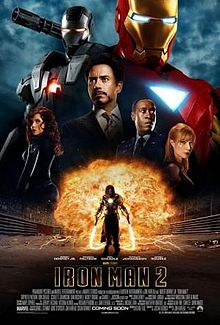
As usual, I’m a few years late on my movie reviews.
But it’s worth remembering that when this movie first came out back in 2010 it generated a lot of hype and excitement.
Which is strange to think about now given what a totally forgettable movie this was.
It starts out with a pretty lackluster beginning. It moves into a short and unspectacular action scene. And then the movie just seems to tread water for an hour while Tony Stark has a personal crisis (yawn) and works through his father issues (double yawn.)
And then we get to a big climatic action scene at the end which, admittedly, is not half bad. But I’m sure it looked much better on the big cinema screen. Much of the flying robots, chases, and explosions were wasted on my small TV screen.
So, definitely not the best movie I’ve ever seen.
On the other hand, there were several things that worked well about it.
Robert Downey Jr. is great, of course, as he was in the first Iron Man.
A friend of mine recently said, “All these Iron Man movies aren’t that great. If Robert Downey Jr. wasn’t in them, they would all be awful.”
Which is probably true. But so what? There are tons of movies that are saved purely by the actors that carry them. And Robert Downey Jr. as Tony Stark/Iron Man is able to carry a lot of this movie.
Sam Rockwell is also good playing against Robert Downey Jr. Rockwell plays Hammer, a man in the same line of work as Tony Stark, and someone who thinks he is able to joke and schmooze just as well as Tony Stark but whose constant jabbering just comes off as annoying instead.
(For instance, when trying to sell weapons, Hammer jabbers about a special bullet:
“It’s capable of busting a bunker, under the bunker you just busted. If it were any smarter, it would write a book. A book that would make Ulysses look like it was written in crayon. And then it would read it to you.”)
But it works because the audience is in on the joke—we know he’s supposed to be annoying, and we see him constantly contrasted against the genuine smoothness of Tony Stark.
And even though the story lags a bit, the writing is not altogether terrible.
There’s some clever foreshadowing going on, where Vanko is muttering about how there will be no men in the suit, and how drones are going to be better. At the end of the movie, we find out exactly why he was planning this, and what he is going to use it for.
I also thought it was clever that the method by which Iron Man and War Machine defeat Vanko was also something they had discovered by accident earlier in the movie.
Continuity
As these Marvel movies lead up to the team-up movie Avengers, there are increasing efforts to tie them together. Captain America’s shield makes a cameo appearance. The Scarlet Widow is introduced in this movie, and Nick Fury has an expanded role. And the post-credit teaser at the end seems to lead into the Thor Movie.
And yet there are hints that the writers might not have had everything perfectly planned out at the beginning. (At the end of The Incredible Hulk movie, Tony Stark makes a cameo appearance to say he’s putting a team together, implying he was in charge of recruiting and organizing the Avengers. This movie now has Stark completely on the outside of that team.)
I think it was a mistake to replace the Terrance Howard as James Rhodes with Don Cheadle. Don’t get me wrong, I like Don Cheadle. But I think it was more important to keep continuity here.
It’s water under the bridge now of course, but for what it’s worth, I think this was a terrible decision by the studio.
Note:
* So what was the deal with Vanko's bird? I really thought that was going to develop into a plot point, but it never ended up going anywhere. He just complained about how he didn’t get the bird he wanted, and then was that just the end of that story thread? What was the point of that?
I quit watching for a
variety of reasons really.For one thing
it had just become too time consuming.When I first became a Star Trek fan in 4th grade, there had only been
one show on the air to watch every week.Only getting a small taste of your favorite show every week is rare
enough to keep it a special event, and to keep you from getting sick of
it.But by 1996, there were two Star
Trek shows currently on the air, and two more in re-runs, and I just got burnt
out by it all.Plus it all got to seem
the same after a while.The original
1960s series aside (the original series has always been its own unique animal)
the basic structure, plots and characters of the 3 modern Star Treks were all
very similar to each other.I just
started to get bored with it all.
I never saw
Star Trek: Enterprise.By the time it came out I wasn’t particularly
interested in Star Trek anymore, and besides I was in Japan when it came out, so I wouldn’t have been able to watch it even if I wanted to.But I did read numerous bad reviews of it,
both from Star Trek fans and the general public.
By the time
it became available on DVD (and for illegal downloading on the Internet) it had
gotten so many bad reviews that I decided not to bother.
But, on a
whim the other day I decided to give it a try.
A co-worker
of mine (and fellow Star Trek fan) told me that the last season was when the
writers finally figured out what they were doing, and the show finally started
to get good.So rather than risk wasting
my time with 3 potential awful seasons just to get to the good stuff, I decided
to start right out with the 4th season.
At this
point, I still haven’t seen the first 3 seasons.They may well be as bad as everyone says they
are.I don’t know.
But what I
can say with confidence is that Star Trek: Enterprise season 4 is good.
Inevitably,
some of the episodes in the 4th season are better than others.But when they are good, they are really
good.And when they are mediocre—well,
they’re certainly no worse than any of the other Star Trek series on a bad day.
There’s
plenty of action, the stories are suspenseful, the pacing excellent, the
characters likeable enough.And for fans
of the original 1960s show, I really enjoyed all the fun nods back to the
original.Many alien races and concepts
that were introduced on the original Star Trek, and then subsequently ignored
by the next 3 Star Trek incarnations, are given a lot of screen time on
Enterprise, like the Andorians, the Orions, the Gorn, the Tholians, and the
Mirror Universe.
I was
worried a prequel series would mess with Star Trek continuity, but they was
pleasantly surprised how the writers took great care to match everything
up.(I’m told the previous 3 seasons
were very sloppy about continuity, but at the moment I can only vouch for the 4th
season.).
The 4th
season is definitely worth watching, I guess that’s all I’m trying to say.Now I just have to get around to watching the
other 3 one of these days.
A couple years ago, back when this movie was still in production, I was eating pizza with some Canadian and Australian friends when we got to talking about upcoming movies, and the production of this movie came up.
One of the Canadian girls must not have been very into comic books, because she had never heard of Captain America before. When she heard that the American film industry was making a movie about a superhero named Captain America, she didn’t know whether to find it funny or be outraged, and so she alternated between the two emotions as she grilled me on what we Americans were thinking.
“Captain America? CAPTAIN America? Captain AMERICA?” Each inflection of her voice showed increasing incredulity. “You guys actually had to go and make a superhero called Captain America?”
Being a comic book geek, I tried to stick up for Captain America. “Well, look, you’ve got to view these old superheroes as kind of time-pieces from a different era. He was created during World War II. It was fashionable back then to have all sorts of patriotic themed superheroes fighting the Nazis. You had Liberty Belle (W), Uncle Sam and the Freedom Fighters (W), the Star Spangled Kid (W) ….”
“Yes, but you’re still making movies about Captain America in the 21st century? World War II is over.”
“Well, Captain America went out of fashion for a time after the war ended. But then during the 1960s he got thawed out from the frozen ice he was trapped inside, and …”
“What? Did you need to thaw him out for the Vietnam War then?” she said sarcastically.
I never did succeed in winning her around to the side of Captain America.
I’m probably going to lose all my hip, liberal, credentials for saying this (not to mention all my Canadian friends) but I actually like Captain America.
I don’t agree with the jingoism of all the 1940s patriotic superheroes, but I recognize them as relics from a former era. And as a comic book geek I think they have their charm in a cheesy kitschy way. And a certain part of me thinks comic books are all the cooler for keeping these outdated superheroes going.
That’s what makes comic books such a unique medium. Every generation creates its own superheroes which match the sensibilities of the time, but the superheroes from previous decades are never discarded. The old superheroes are just interwoven into the new stories and so both Marvel and DC have found ways to keep alive their superheroes from the 1940s, the 1960s, and the 1980s all together in the same interwoven story. Some people may call me a geek, but I think that’s kind of cool.
What Stan Lee did with Captain America in the 1960s was particularly interesting. Instead of just modernizing Captain America and dropping him off in the 1960s as if he had been there all along (like DC did with some of their 1940 Superheroes), Stan Lee decided Captain America had been trapped in ice for 20 years. When he was finally unfrozen, he had a fair amount of angst about being 20 years behind on the world, and finding out how much had changed in his absence.
Stan Lee also decided that Captain America’s kid sidekick Bucky had been killed in their last mission right before Captain America got frozen in ice. So in addition to being disoriented by the time skip, Captain America had to deal with the guilt of his dead sidekick.
(This was in keeping with Stan Lee’s standard practice in the 1960s and making sure each character had some sort of angst to keep them interesting for the reader.)
So the character has some interesting history to him.
I also like how Captain America has been used as the liberal voice at Marvel Comic Books over the past 50 years. The fact that his very name is Captain America allows the writers to get away with putting a lot of liberal views into his mouth in an “Only-Nixon-Can-Go-to-China” type way. After all, who is going to accuse Captain America of being anti-American?
So during the 1960s, Captain America was sympathetic to the hippies. During the lead up to the Iraq War, he spoke out against all the anti-French sentiment going on in America.
However, at the end of the day, all of this doesn’t change the fact that Captain America, as he was originally created in the 1940s, was propagandizing kids into supporting war. Which ought to disturb us.
And so I go into this movie with mixed feelings. The comic book geek in me loves Captain America. The anti-military side of me is ambivalent about what sort of political message this movie is sending.
Ordinarily when I walk into Hollywood action movies, I try and turn the political side of my brain off, and just focus on the entertainment value and try and ignore all the politics I disagree with. But how much is this movie going to let me do that, and how much is it going to hit me over the head with its patriotic message?
The Movie Review
Let’s start with the easiest questions first, and work our way back from there:
How did this movie work just as a mindless action flick?
Okay, I guess. I mean it wasn’t bad or anything.
Although it did have kind of a long slow boring start. And then even once the action did start, it seemed a little bit episodic to me. There are various little mini climaxes, but the movie didn’t do a good job of keeping the tension or the momentum going between action scenes, causing me to get a little bit bored.
The final confrontation with the Red Skull was really a disappointment. Here was someone who had the same strength and ability Captain America had—it could have been a great fight scene, and yet it really just fizzled out with a resolution that seemed way too borrowed from Raiders of the Lost Ark.
Also, the cool thing about Captain America has always been that he fights all his battles with his own strength, agility, and his special shield. So I think it was a mistake that in some of these action scenes he’s shooting bad guys with a gun. Whose idea was it to give Captain America a gun?
Bucky Barnes
Also, the character of Bucky really felt pointless in this movie.
I know what a large role the death of Bucky plays in Captain America’s story in the comic books, but in the movie he didn’t really justify his inclusion.
Also, as far as I’m concerned, when it comes to agonizing over Bucky’s death, once is enough.
Such a big deal is made out of the fact that Bucky might be dead behind enemy lines. Captain America goes in for a heroic rescue attempt. And then there’s relief when Bucky is found alive and well.
And then, after all that, Bucky is killed off a second time, so Captain America can feel sad for Bucky all over again.
All of this for someone who (at least as he is portrayed in the movie) is just the generic buddy character and never developed beyond that, and consequently someone the audience wouldn’t really care about except that we’re told we have to care about him because Captain America does.
Well, I can just about manage to maybe make myself care a little bit about Bucky the first time he is M.I.A. behind enemy lines, but when we lose him for the second time, I just couldn’t be bothered caring anymore.
Captain America has a brief sad scene with a bottle of alcohol after Bucky dies, and then after that he promptly forgets about Bucky as well and no one ever mentions him again.
(It’s possible this is all set up for future dead Bucky angst in the sequels, and I’ll have to wait and see how the writers develop this in the future movies. But as far as this movie goes, Bucky was completely pointless.)
Okay, so much for the entertainment value of the film. Now we get to the more sticky questions.
The Jingoism
I’m a bit conflicted on this, because (and again I say this as a comic book geek) there really is something to be said for authenticity.
It’s all too easy to imagine a movie studio wanting to update Captain America or put him into the 21st Century.
So this movie gets some credit from me for following the original comic books, and putting Captain America back where he belongs in the 1940s.
The angsty man-confused-because-he’s-in-the-wrong-time period Captain America of Stan Lee might be more interesting than 1940s war hero Captain America, but you can’t have the one without first setting up the other. And from the way this movie ends, it’s clear that they plan to follow the Stan Lee storyline in the future.
If you are going for authenticity, then I think there’s a fine line to be walked here. You have to show that Captain America came from a more jingoistic period of American history, but you don’t want to make the movie itself jingoistic. I admit, it’s not an easy task. Had I been one of the writers, I’m not sure I would have done any better.
There’s another consideration as well. Whatever your views are on the military, you don’t want to trivialize the suffering that the soldiers went through by making World War II look like just one big fun adventure.
On the other hand, there’s a long pulp comic book tradition, dating all the way back to the 1940s itself, of making World War II look like just one big fun adventure.
I think part of the key is that Captain America doesn’t exist in the real world—he exists in the comic book world. As long as things stay firmly in the pulp comic book world, it is kind of okay.
The comic book world is not concerned with the serious side of the war. Instead it’s filled with killer Nazi robots, evil Nazi doctors, Nazi spies who have secret submarine boats located just outside New York that nobody notices for some reason, and fights with Nazis on speeding trains, et cetera. You want the heroes to not be fighting real people, but mindless evil Nazis. And, in fact, if you can do one better than mindless evil Nazis, and make them into HYDRA, an even eviler cult within Nazism, then you’re doing one better.
This movie has all these elements, so it is somewhat on the right track.
But it also has scenes of Steve Rogers (Captain America) scolding people in movie theaters for not showing proper respect to newsreel footage of American soldiers. It has an overly long introduction where we are repeatedly hit over the head with the theme of a pure-of-heart ordinary American kid who just wants to join the army so he can stand up to foreign bullies.
It shows Steve Rogers repeatedly trying to enlist for the army, and repeatedly mentioning his desire to join the war, and it makes this out as a noble trait. At times, this movie almost plays like a commercial for army recruiting.
And then even after Steve Rogers becomes Captain America, he still is obsessed with getting to the fighting.
In fact, the first time I attempted to watched this movie, I turned it off after 45 minutes and said, “Yeah, I get it. He can’t wait to join the war, and just he really loves America.”
(But, the next night, there was nothing good on TV, so I ended up finishing this movie out of boredom.)
The studio executives must have decided that these scenes would play well in America’s heartland. And they probably did. But they had me rolling my eyes.
And (since all Hollywood movies are essentially international releases now anyway) I can only imagine what the reaction of the rest of the world is.
I’m glad my Canadian friend never saw this movie, because I would have trouble defending it to her.
Geek Notes
* As a comic book geek, I’m glad to see the movie found an excuse to include Dum Dum Dugan and the other members of the Howling Commandos, even if they didn’t really add anything to the story.
* In another nod to comic book fans, the movie also found a cool way to reference the iconic first cover of Captain America [See Here].
* For all its faults, this is probably the best Captain America movie comic books fans had the hope of getting. It didn’t hit every note perfectly, but it managed to include all the major parts of Captain America’s story: his World War II origin, the death of Bucky, and his being frozen in ice.
Hopefully the character will become more interesting in future movies.
 (Movie Review)