Showing posts with label C.S. Lewis. Show all posts

Saturday, October 03, 2026

The Silver Chair by C. S. Lewis: Book Review


Wednesday, September 23, 2026

The Voyage of the Dawn Treader by C.S. Lewis: Book Review


I get cut off again at the end of the video (my camera automatically shuts off after 30 minutes.)  But I had said most of what I wanted to say.


Monday, September 14, 2026

Prince Caspian by C.S. Lewis: Book Review (Chronicles of Narnia Book 2)


Links to stuff mentioned in the video:

Related Playlists:


Wednesday, January 14, 2026

The Lion, the Witch and the Wardrobe by C.S. Lewis: Book Review (Chronicles of Narnia Book 1)


(This is a reread.  It was read to me multiple times in childhood.  But as this is my first time reviewing this book on my blog, according to my new rules, I'm doing this as a video only review.)


Links to stuff mentioned: 

Related Playlists:


Wednesday, April 13, 2011

The Voyage of the Dawn Treader

(Movie Review)

I know this movie had gotten somewhat mixed reviews, but I wanted to see it anyway. I had enjoyed the two previous installments in "The Chronicles of Narnia" series (see my review of "Prince Caspian" here).

And, like everyone else in the Western World, I had a childhood nostalgia for the original books by C.S. Lewis.
("The Lion, the Witch and the Wardrobe" and "Prince Caspian" had both been read to me. Twice. Once by parents and then again by my first grade school teacher. "The Voyage of the Dawn Treader" was the first book in this series I actually read on my own. I was curious to see what became of the Narnia characters, and so I asked the parents to buy me the book when we were on vacation in 3rd grade. I think I actually read this book twice, once in 3rd grade, and then once again in 6th grade. But I haven't read it since then, and so aside from one or two things sticking in my memory, I can't claim to remember it very well.)

And I also saw the BBC TV miniseries version of "The Voyage of the Dawn Treader" (W) back around the same time, which I don't remember other than thinking it was pretty hokey.

I'm therefore very pleased that this new movie series has come along and is trying to give the Narnia series the big screen treatment it deserves.

It is a pity that this is likely to be the last installment in the series. (Based on what I've been reading, at least. After the disappointing box office performance of "Prince Caspian",this movie only just barely made in the first place. And then because this movie didn't do exceptionally well in the theaters, I'm not expecting the next installment in the series to get any funding. But I'd like to be proved wrong.) But I suppose this series was not the first attempt to film "The Chronicles of Narnia" and it will likely not be the last. Hopefully in another 20 years someone else will take another crack at it.

One of the things that separate the Narnia series from some other book/movie fantasy movie franchises out there is that every story in the Narnia series is quite different from the one that came before it. Unlike, say the "Lord of the Rings" trilogy, or "Harry Potter", where each movie has a very similar plot to the one that came before it, the Narnia stories have very different plots for each different book.

"The Lion, The Witch, and the Wardrobe" was more or less a straight up fantasy story. There was a lot of wonder about seeing a new world filled with fantastic creatures, and a standard good versus evil epic battle scene at the end.
"Prince Caspian" added in an element of legends and myths. The events of the first story are so far removed in the past that they are only vaguely remembered in the second story, and are treated much like far away mythical subjects.

"The Voyage of the Dawn Treader" is yet again much different in tone than the first two movies. It's a sea voyage type story. It almost reads like a fantasy version of Captain Cook's diaries: you go to an exotic land, you encounter strange new people, you go off to the next exotic land.

It is tough material to make a coherent movie out of, to be sure. And because of this, it does require that you be a little bit more forgiving when you watch it. But for those of us who remember the books fondly it is fun just to see the film makers make an attempt at transferring the story to the big screen.

Despite the fact that this film reportedly was made on a much reduced budget than the previous two films, I did think they did a good job working with the money they had. The various oceans and landscapes that pop up in the film look beautiful, and it is visually very impressive.

I would have preferred to see a few more fantastic creatures. I understand this is partly just because the script didn't call for as many new fantasy creatures, but in the two previous movies, there were lots of exotic creatures just hanging out in the background. Their reduced presence in this movie might have been due to the budget.

The character of Eustace Scrubb is very annoying, but then he was supposed to be written as annoying, so I guess you can't complain about that.
He is also supposed to serve as a lot of the comedy, and this really falls flat in my opinion. He is able to be "plain-annoying" just fine, but he never really rises to the level of "comically-annoying." In my opinion a lot of the attempts at humor in this movie were just embarrassing.

On the other hand, kudos to this movie for working in a cameo for the two older Pevensie children Peter and Susan, despite the fact that the book didn't include them. It was a nice little touch to continuity. As was the return of the White Witch from the first movie.
I'm disappointed that my favorite comedian, Eddie Izzard, did not return as the voice of Reepicheep, but since the character was animated anyway it's not so noticeable when they switch voice actors.

Link of the Day
Noam Chomsky--the current crisis in the middle east

The Voyage of the Dawn Treader: Movie Review (Scripted)

Friday, January 23, 2009

Prince Caspian

(movie review)

(Another movie, late review, geographical location, bear with me, et cetera).

When "The Lion, The Witch, and the Wardrobe" came out 3 years ago, it was before I had started my anal retentive blogging project of reviewing every single movie I watched.

At that time, I was just reviewing movies sporadically, when I felt I had something worth saying.
I had a few thoughts knocking around my head after the first Narnia movie, and I was considering writing a post, but then I discovered Andrew had already written a blog post which said what I wanted to say, and a lot more eloquently and succinctly than I could have said it. So instead of writing up something of my own, I just linked to his post.

Unfortunately, if you follow that link today, it appears Andrew has deleted his blog, and the post has vanished. Which is unfortunate because I thought it was a really well-written review.

So I'll just recap briefly my thoughts on the first movie: back in 2005 I think a lot of us were a little nervous about "The Lion, the Witch, and the Wardrobe" movie. Like everyone else in the western world, C.S. Lewis's books had been an important part of my childhood, and I had fond memories of the story. But let's face it, these books would have been difficult to film at the best of times. You have to duplicate C.S. Lewis's touch of subtlety so that the religious themes are there in the background, but the viewer doesn't get hit over the head with them.
You also have a story with lots of fighting and battle scenes, and you need to film for a children's audience without making it too violent, but without defanging it entirely.

Add to all this, the cultural wars that were going on during 2005. "The Passion of the Christ" had just proved that evangelicals were a new market force that Hollywood was eager to cash into, and this movie was supposed to combine the "Lord of the Rings" audience with the "Passion of the Christ" audience. It seemed like a disaster waiting to happen.

And yet, for the most part, "The Lion, the Witch and the Wardrobe" managed to hit all the notes just right. Sure, you could make quibbles about this or that, but when you consider the huge potholes the movie could have fallen into, I think it did a good job of walking that thin line, and avoiding all the different pressures on it. It pushed all the various agendas to the background, and simply tried to retell C.S. Lewis's original fantasy adventure story.

And I feel the same about "Prince Caspian", which is another excellent movie. Like it's predecessor, it manages to avoid the pitfalls of cultural wars and instead just gives the audience a really good story.

The first movie did a great job of creating a sense of wonder about a new fantasy world filled with exotic beings. And I think "Caspian" does a good job of duplicating this, plus showing how the stories of the first movie have become old legends and myths by the second movie.

The various battle scenes are well choreographed and very exciting.
The scenery is absolutely stunning. It makes me wish I had seen this movie on the big screen.
Like many fantasy films these days, this film was mostly shot in New Zealand, which must be an absolutely gorgeous place to visit.
(When I was a JET in Ajimu, the only other foreigner in the town was from New Zealand, and he used to tell me over and over again how beautiful New Zealand was, and how everyone who visited it never wanted to leave. The more I see of New Zealand in films, the more I'm beginning to think he wasn't exaggerating).

If the first two films are anything to go by, I'm really looking forward to seeing "The Voyage of the Dawn Treader" when it comes out.
The only thing I worry about slightly is that these films are so good and so exciting, I wonder if kids will even bother to read the books in the future.
Don't get me wrong, I would have absolutely loved these films if they had been around when I was a child. But because C.S. Lewis's books are vague in places and leave a lot up to the imagination, I worry it might be hard to go back to boring old printed page after seeing all the dramatic battle scenes acted out on the screen.
Will these movies inadvertently kill what has, up until now, been a staple in every child's literary up bringing?

And well I'm at it, there are a couple other run off issues from this film that I worry about.

Some evangelicals have been pushing the Narnia Chronicles as the alternative safe fantasy series which all the good little Christians should go out and see, as opposed to bad little Christians who watch movies like "Harry Potter" and "The Golden Compass".

And, similar to "The Passion of the Christ", there has also been some public crowing by evangelicals about how well the Narnia series has done at the box office relative to other movies. As if it's a contest. Or as if somehow the glory of God can be advanced by the amount of people who bought tickets for these movies.

To the extent that small minded people have used these movies to advance their own agenda in the culture wars is unfortunate, but luckily it need not impede the enjoyment of these movies, which stand alone quite nicely independent of the culture wars.

The other issue is the violence. Because this movie is based on a Christian story, and because this series has become part of the culture wars, we find ourselves looking more closely at the violent content than we would at any other movie. I imagine we wouldn't even blink if these kind of battle scenes were in any other movie (even any other kids movie).
For just one example of the hand-wringing about the battle scenes in this movie, look at "Focus on the Family"'s review of this movie.

My impression, just based on reading reviews of this movie, is that there is that there is a bit of hypocrisy going on both ways. Some people are being extra hard on this movie because of its religious associations, and criticizing battle scenes which wouldn't even be noteworthy in any other film.
Other evangelicals who have made a career out of criticizing violence in Hollywood are giving this movie a free pass just because the source material comes from one of their own.

Personally, I'm not sure how I feel about it, because I'm not sure how I feel about violence in movies in general.
I'll be honest, I really enjoyed the battle scenes. I was really glad that the film makers didn't skimp on any of the fighting parts.
There's a part of me gets a real thrill out of seeing that kind of thing on the screen. I couldn't explain it logically, but it's something most males share. There's just something about that Y chromosome which makes us prefer stories of gunfights and sword battles to stories about love and relationships. Like most modern males, I've been attracted to violent stories my whole life,and I've felt somewhat guilty about it my whole life.

In my own life, I've made a distinct between fantasy violence on the TV screen (which I get a kick out of watching) and real life violence (which I oppose). And I like to think I've done a pretty good job of keeping the two separate. Hopefully most other people can too, but I can't vouch for everyone.
And even if I could, I'm not sure I could translate that into a moral absolute. Or in other words, even if I could make a really good case that violence in media doesn't have any effect on violence in real life (by, say, pointing out a society in which the violent media was even worse than in the US, but the violent crime rate was unbelievable low), I'm not sure I could make the jump to say it is therefore morally okay to show violence in the media.

The debate about sex and violence in the media has been going on long before we were born, and it will continue long after we're dead, and I don't want to clutter up this blog post too much with my half thought out ramblings. So let me try and see if I jot down a few intelligible thoughts about this story in particular, and then we're just have to move on from there.

The source material in Lewis's books are fairly violent to begin with. Granted, a lot of the battle scenes are implied rather than shown, or briefly covered in just a few sentences. But, let's face it, that may work in a book, but you couldn't make a movie like that.
Plus, I think I speak for all the former 6 year old boys who had this book read to them, in the theater of our minds we imagined it. The battle scenes that Lewis described in just a few sentences were huge epics in our own minds.
This is the same reason that young boys like the Old Testament so much. The bible may not give blow by blow accounts of all the fight scenes, but you'd be surprised what a 7 year old male imagination can do with a simple sentence like, "Finding a fresh jawbone of a donkey, he [Samson] grabbed it and struck down a thousand men."

And dare I say, C.S. Lewis's stories would never have become popular among young boys in the first place if it hadn't contained that hint of violence in them.

In fact, well I'm at it, I think you can make the argument that almost the entire cannon of Western literature (nay, world literature) is based off of the human fascination with either sex, violence, or both. Think about works like the Old Testament, the Iliad, Ovid, Shakespeare, "The Romance of the 3 Kingdoms" , "The Tale of the Heike", "The Tale of Genji" (etc, etc, etc, I could list books all day.) Some works are more subtle than others, but it's hard to find a classic piece of literature in which these themes are not present to some degree.

But, okay, books are one thing, movies are another. How does a Christian responsibly translate Lewis's story onto the big screen?

This is a sticky issue, because there's a temptation to reduce this to a question of degrees. A small death toll on screen is morally acceptable, a big death toll is not. "Prince Caspian" is okay for good Christians to see because there's only 12 deaths depicted, whereas "Terminator 2" (which used to be my middle school teacher's favorite example of a movie good little Christians shouldn't go to see) shows 47 people dying. [These numbers are pulled out of my hat, by the way, but you get the idea.]

Of course another big difference between "Prince Caspian" and "Terminator 2" is the amount of blood and gore. "Prince Caspian" doesn't have any blood, and the focus on the family review cites this as a good thing.
But here again, this again is another complicated question. As every film buff knows, graphic violence in modern film was introduced by movies like "Bonnie and Clyde" and "The Wild Bunch" . At the time the directors argued that if you could show people how ugly and brutal real violence was, they would be less violent in their own lives. They argued it was the bloodless violence of cartoons and Saturday matinees that glorified and encouraged violence. And there may be something to this.

Having talked myself around a circle, I'm just going to have to end by saying I don't have easy answers to these questions and let it go at that.

Addendum: Look, I realize the above post is a bit of a mess. Sorry about that. It's hard to review a movie and write about violence in media in the same post. It just seemed impossible to talk about the Narnia movies without mentioning the battle scenes, and it seemed impossible to critique the battle scenes without exploring the whole question. Hopefully my thoughts are at least somewhat intelligible, even if they are inconclusive.

Second Addendum: But one last thought. I wish "Focus on the Family" and other groups on the Christian Right would get as concerned about real violence as they do about fantasy violence. James Dobson and "Focus on the Family" have been strong supporters of the Iraq War all the way through (see for example this link here). Compare this to the hand-wringing about the battle scenes in the Narnia movies in the review above. And--let's face it--"Prince Caspian" was one of their softer reviews. They really go for the juggular of the more mainstream Hollywood violence.
I know they're concerned about the effect on children, but someday I would like them to become just as equally concerned about the effect on children of losing a parent to war, or being bombed out of your home, or having depleted uranium scattered all over your country.

Another Addendum: Gasp! According to this article, the next film in the Narnia series might not even get made. Quick! Rally your prayer group!

Link of the Day
2008 year in review: Goodbye to all that! and 2008 year in review: Part 2, The end of an error

Thursday, January 18, 2007

That Hideous Strength by C.S. Lewis

(Book Review)

This is the 3rd and final book in Lewis’s space trilogy. However it differs a lot from the previous books both in terms of tone and plot.

This book is often referred to as C.S. Lewis’s “worst and most enjoyable book”. It is made up of several different diverse elements. Whether they all come together succinctly as a whole may be questioned, but there’s no lack of material here to keep your interest while reading it. Consider all the different themes and plot elements in this book:

* The conclusion of the “Space Trilogy” and the fates of the characters left over from the first two books.

* More spiritual warfare

* The resurrection of Merlin, and a tie-in with the legend of King Arthur

* References to the fall of Numinor and a tie in to the Middle Earth of JRR Tolkien

* a dystopian police state future society, which is rumored to have influenced George Orwell’s writing “1984". This book was published in 1945 just a few years before “1984", and George Orwell gave it a (mostly) favorable review in “The Manchester Evening News”. (Read George Orwell’s review of this book here.)

* Similar to the animal characters in the “Narnia” series, intelligent animals play a large part in this book, in particular a bear named “Mr. Bultitude”.

* Leather clad female police squads with a tendency towards sadism

* And a bit (perhaps more than a bit actually) of the horror genre thrown in at the conclusion.

So you see what I mean. If you’ve not read this book yet, I reckon there’s at least one element above that might tempt you into checking it out.

I don’t agree with Lewis’s politics across the board (we’ll get to more of that below), but I do think that, unfortunately, we are once again living in a time when his and Orwell’s warnings about torture and police states are becoming relevant.

For instance, in “That Hideous Strength” one of the characters writes an editorial defending the police actions which reads in part, “I’ve one bit of advice. If you hear anyone backbiting the police, tell him where he gets off. If you hear anyone comparing them to the Gestapo or the Ogpu, tell him you’ve heard that one before. If you hear anyone talking about the liberties of England...watch that man. He’s the enemy.”

To my ear, this sounds remarkably like John Ashcroft’s famous comments: “To those who scare peace-loving people with phantoms of lost liberty, my message is this: Your tactics only aid terrorists, for they erode our national unity and diminish our resolve.”

Also, as in “1984" and “It Can’t Happen Here”, torture plays an important part in Lewis’s dystopian society, and a lot of the problems associated with torture are examined. From a practical point as well as an ethical point. The characters discuss the problems of the reliability of information obtained from torture, and what happens when the victim legitimately has nothing to confess. Lewis also shows how quickly torture can devolve from dispassionate government policy to pure sadism.
“You won’t find anyone can do a job like mine well unless they get some kick out of it,” the chief torturer asserts at one point. All of this is of course relevant to our current national debate.

(Side note: do you ever have one of those moments of clarity where you wake up and say to yourself: “I can’t believe we’re actually debating this. How did we as a nation get to the point where we are even discussing torture as an option?”)

Other points of Lewis’s philosophy I’m less enthusiastic about. Parts of this book read like a polemic against feminism. I’m beginning to think I was too lenient to Lewis in my review of “Perelandra”. There’s even a speech in this book on the importance of obedience and submission in marriage.

As for the actual story itself:
Although this is part of Lewis’s “Space Trilogy”, all the action in this final book takes place on earth. And, although there are references to events in the previous two books, this is a fairly self contained story, and can be read on its own if you want to skip the first two books, and jump into the meat of the trilogy. (For my money, this book was the most interesting of the 3, although there are a number of people who like “Perelandra” the best because of the imaginative imagery Lewis uses in creating the Paradise water planet.)

I mentioned that “Out of the Silent Planet” was very narrative driven, and that was true. This book is written in a much different style though, and is dialogue driven. Which I think makes for much more interesting story. The quips the characters make to each other also allows for C.S. Lewis’s wit and humor to shine through in this book a lot more.
Also more dialogue means more opportunities for Lewis’s characters to use colorful language. I really wish I had known about these books back when I was going through the Christian school system.

The big problem plot wise is the problem with most religious literature: the climax is spoiled by divine intervention. This may work as theology, but it is problematic in novels. I noticed around 4th or 5th grade that most of the stories in the “adventure magazines” I got from my Sunday School classes always relied not on the characters struggling through, but on direct or indirect divine intervention in the final act. I have since then done my best to avoid religious literature like the plague.

C.S. Lewis is a more talented writer than most Christian novelists, and so the enjoyment of reading his prose somewhat makes up for this, but this kind of “deus ex machina” type ending is a real problem. (If you read the review by George Orwell linked above, you’ll notice he also cites this as his main criticism, but I’ll have you know I thought of it independently.)

Of course this isn’t always unique to Christian literature. You’ll notice I had the same criticism of Stephen King’s “The Stand”.

Useless Wikipedia Fact
"More Cowbell" is a line from an April 8, 2000 Saturday Night Live comedy sketch about the recording of the song "(Don't Fear) The Reaper" by Blue Öyster Cult. The sketch featured guest host Christopher Walken as music producer Bruce Dickinson and Will Ferrell as fictional cowbell player Gene Frenkle. The line itself has grown into a pop culture catch phrase.

Link of the Day
More Tom Tomorrow
But were we right enough?
There’s a very silly debate going on in the blogosphere right now about whether those of us who opposed the war from the start deserve credit for our prescience if, in many cases, we did not predict every single thing that would go wrong in exactly the precise order it would do so. (You can catch up on this, if you care, by reading this from Tbogg and this from Atrios.)
Well, two things. First: Lord knows, I’ve been wrong often enough in my life and in my work, but at the risk of straining a muscle as I pat myself on the back, let me direct you for the umpteenth time to this cartoon from April of 2003, which predicted the next four years with the sort of eerie accuracy that Nostradamus could only have envied.
I will pause as the shivers run up and down your spine.
Okay then. Clearing throat, moving along: it’s also worth directing your attention to Roy Edroso, who responds to the silliness rather definitively, here.
(Read the rest of the post here)

That Hideous Strength by C.S. Lewis: Book Review (Scripted)

Tuesday, December 19, 2006

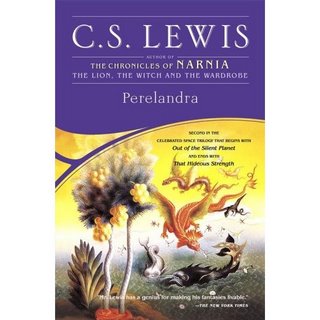
Perelandra by C.S. Lewis

(Book Review)

Continuing on through Lewis’s “Space Trilogy”, this is now the second book in the series.

As Phil points out, this book is in many ways superior to its predecessor “Out of the Silent Planet”. The first book didn’t really have much of a plot other than “Man travels to new planet and encounters many strange things.” In this book, now that the set-up has been established, the story line starts to pick up a little. It does take place on a completely different planet, but many of the characters are the same: the unlikely hero Dr. Ransom, the evil Dr. Weston, and C.S. Lewis himself, who continues the conceit he established in the first book of writing himself as a minor character into his own series.

The religious themes are also a lot stronger in this book. In the previous book, only slight references are made to God or Dr. Ransom’s religious faith. The Christian overtones were there, but it was possible to ignore them and still enjoy the book, just like the Narnia Chronicles. This book, on the other hand, is very blatantly and very explicitly about spiritual warfare on another planet.

If you go into any Christian bookstore, there is a lot of Christian fiction dealing with spiritual warfare. Most of it absolute crap. (I had to read “This Present Darkness” by Frank Peretti in high school, and absolutely hated it. Also reference the “Left Behind” Series). I think spiritual warfare might be to Christian writing what sex scenes are to secular books: it’s something everyone wants to write about, but almost no one can do well.

Lewis seems to be one of the few who can do it well. Partly by keeping it simple. (There’s only one demon to keep track of here, as opposed to a whole hierarchy as in Peretti’s book). But also because Lewis has pioneered his own genre which might be labeled “Theological Science Fiction”. Lewis takes well known parts of the Christian doctrine, and uses the medium of Science Fiction to play the “what if” game with them.

In the previous book, Lewis explored a world and civilization which predated the creation and fall of man. This time it is the opposite. The world of Perelandra is younger than Earth, and asks the question: if God created again after the fall on Earth, how would his new creation be different? In this new world the story of the Garden of Eden and the temptation is reenacted, but in a different setting and with different results.

I didn’t agree with everything in this book, but I found it possible to look over what I disagreed with and still enjoy the book. In particular, Lewis has gotten a lot of criticism for his portrayal of gender roles in this book. At various points he seems to implying that God has assigned women the role of housekeeper and child bearer, and the temptation to expand from these roles is the Devil’s handiwork. But all of this is very slight, and I suspect that it wouldn’t be such a big deal if Lewis wasn’t already under fire for his portrayal of women in his other books. It's about what I expected from a book written in the 1940s. I’m sure it would be different if it were written today.

Useless Wikipedia Fact
The lecture by the Maharishi Mahesh Yogi that inspired "Mother Nature's Son" also inspired John Lennon's unreleased song "Child of Nature," the tune of which he later re-used to completely different effect in "Jealous Guy."

Link of the Day (slash mini-rant)
U.S. first ladies to be honored on coins: Not to be outdone by their husbands, the first ladies are getting their chance to shine on the nation's coins. Starting next year, Martha Washington, Abigail Adams and all the rest will begin appearing on a new series of gold coins.
It will be the first time in history that the U.S. Mint has produced a series featuring women.

Does anyone else think this is the lamest idea ever? The US mint wants to create some diversity, and the best idea they can think of is a series of women famous for being good wives to the Presidents?
And what is this obsession with the President's and their family? Are they our royal family? Are we going to have a mint next with the daughters of Presidents? Personally I like the idea of Japan and other countries which have artist and authors on their currency instead of politicians. Elected officials? Okay, I can live with that. The wives of elected officials? Come on!
The sad thing is, if the US mint wanted to do a series of women, there is no shortage of brave women activists in US history. I guess some of them might have been controversial, but you can't tell me anyone is rushing out to get the new Abigail Adams coin.

Message to the next generation of American Girls: Work hard, and you too might someday marry someone famous.

Perelandra by C.S. Lewis: Book Review (Scripted)

Monday, December 04, 2006

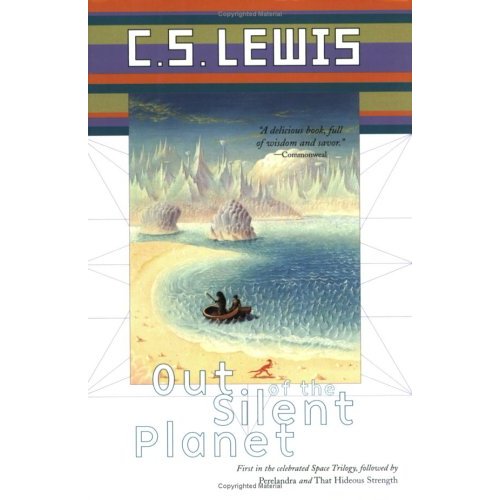
Out of the Silent Planet by C.S. Lewis


(Book Review)

Yet another book which has been on my list for a long time, I’m finally getting around to reading C.S. Lewis’s space trilogy.

Interestingly enough, C.S. Lewis begins this book by acknowledging his debt to H.G. Wells. H.G. Wells was one of my favorite science fiction authors as a child, but one does not often associate the socialist, atheist Wells with C.S. Lewis. However if nothing else the styles of both authors are very similar. In both of their writings, the voice of the narrator is very strong.

Obviously the nature of popular fiction has changed over the years. Most contemporary fiction relies heavily on dialogue and the voice of the characters to further the plot. Lewis and Wells instead rely much more on the voice of the narrator (as some of you may remember from childhood and the Narnia books). Since it was a long time since I read Narnia, I found this style a bit jarring at first, but it grew on me as I stuck with the book.

Like many children, I grew up with Lewis’s Narnia series, and only afterwards realized the religious symbolism in the books. As an adult, I catch onto it much more quickly, and there are a lot of religious themes in Lewis’s books (to state the obvious). I wouldn’t call Lewis’s religious themes subtle, but it wasn’t overbearing either. It’s definitely a lot better than the “Left Behind” series. Lewis avoids a lot of sermonizing and preaching in his books.

Instead, the philosopher theologian in Lewis explores a lot of interesting questions. Like, how do Angels talk without physical bodies? I mean how do they manipulate sound waves without a physical device?

Or, if you grew up in the church, and if you were a science fiction fan, perhaps you used to wonder, “If there is life on other planets, did they experience sin like we on earth did, or are they still in the Garden of Eden pre-fall stage. And if so, what would happen if they ever interacted with our earth?” I know I used to ask that question a lot in Sunday School. I never did get a good answer back then, but Lewis posits one possibility in this book about what might occur.

There's not much of a plot to this book. A man goes to Mars, he sees many interesting things and learns about an alien race, and he comes back. There is a certain wonder at a new world lived through the eyes of the main character, but it's nothing science fiction fans haven't already seen many times before. I'm assuming this book is mainly just the set up for the rest of the books in the trilogy. In fact in the afterward, Lewis pretty much says as much.

On a side note: Phil once said in his blog, “When I first decided I wanted to be a writer, I argued endlessly (and predictably) with my parents about what's appropriate to describe: Should characters be depicted in the act of cussing? violence? sex? Since I was raised fundamentalist I actually felt like I had to expend energy defending the position that not every character in a work of fiction needs to talk and act like a nun.”

Since I had a similar background, I thought it was interesting that Lewis used the words: "damn", "hell", "God", and "Lord" as exclamations in this book. Nothing compared to the latest rap albums I’ll grant you, but it would have been more than enough to get me disciplined at the Christian Middle school I attended.

Useless Wikipedia Fact
"Why Don't We Do It in the Road?" is a simple twelve-bar blues song, featuring a constant hammering on the piano topped by McCartney's increasingly histrionic singing. It may be an attempt by McCartney to imitate or parody John Lennon's raw, stripped-down songs such as "Yer Blues" or "Don't Let Me Down." Paul played all the instruments himself (except for the drums, performed by Ringo Starr), and recorded the song without the other Beatles. John was upset that Paul would do a song as controversial as this without him, and most likely this contributed to growing tensions within the band. It is rumored that this sparked his interest to produce Revolution 9 with Yoko.
Lennon was said to have been fond of sarcastically citing "Why Don't We Do it in the Road" as the "best song Paul ever wrote."


Link of the Day
More Japanese Music.
あの人の手紙 "The letter from that Guy". From 1972 during the new folk music revival in Japan. Check it out here. I think you'll agree it's pretty catchy. The guy on the left is actually from Oita Prefecture.

Out of the Silent Planet by C.S. Lewis: Book Review (Scripted)