Showing posts with label Sherlock Holmes. Show all posts

Saturday, May 28, 2016

An Arsene Lupin Omnibus by Maurice Leblanc

(Book Review)

So, who out there has heard of Arsene Lupin?
Is he a classic figure of literature who needs no introduction?
Or is he an obscure literary footnote that I need to explain beforehand?

I had never heard of Arsene Lupin until I was in my 20s.  (...but then that's not saying much.  There's a lot I haven't heard of.)

Arsene Lupin is a gentleman thief, master of disguise, and amateur detective who was created by French writer Maurice Leblanc, and appeared in several short stories and novels from 1905 to 1939.

He's somewhat known in the English speaking world among genre fans.  But he's a household name in his native France.

And, interestingly enough, he's also a household name in Japan

In Japan, Arsene Lupin continues to be popular through the long running anime series Lupin III (W).  Lupin III is a huge part of pop-culture in Japan, and in Japan you would see this character everywhere--on TV, on video games, on posters, on t-shirts. et cetera.


Eventually, after seeing this character everywhere for several years, I got curious enough to research his story, and through the magic of Wikipedia I found out that Lupin III was the grandson of Arsene Lupin, and then I found out that Arsene Lupin was a classic pulp fiction character from around the turn of the century.

My interest was piqued.  As a fan of trashy pulp fiction, I was interested in the adventure stories of Arsene Lupin, gentleman thief.
As a literary snob, I thought that reading these books would help me in my never ending pursuit of becoming "a well-read man".
(According to my own private definite of a "classic", anything before World War I automatically qualifies.  So all the pulp - fiction from the turn of the century gets grandfathered in.)

So I put Arsene Lupin's adventures on my long list of books to get around to someday.

...and then a couple months ago, I saw this omnibus collection in Saigon.  And so I thought, "Yeah, why not?"

What is an Omnibus?
So...it turns out I don't know what an "Omnibus" is.

I assumed that since "omni" means "all" that an "omnibus" would be a complete collection.

"Great," I thought to myself.  "I've just finished the complete Sherlock Holmes.   Why not knock out the complete Arsene Lupin next?"

...only to get the book home, and discover that this volume contained  only 4 books out of the 25 Arsene Lupin books.

And worse yet, it wasn't even the first 4 books.

The completist in me balked at jumping into the middle of the Arsene Lupin canon.  I almost put this book aside in favor of waiting until I found the first book, and trying to read the Arsene Lupin canon in order.

But then, I thought to myself, "Self, realistically, when are you ever going to get around to reading the entire Arsene Lupin canon?"
My backlog of unread books is large enough as it is.
It was better, I eventually decided, to just read this collection now and get a small taste of Arsene Lupin now rather than wait for a more complete collection which I might never get around to.

And so, I jumped into this volume.

Clocking in at 739 pages, this Omnibus contains 4 separate books bound up in one:
Arsene Lupin Versus Homlock Shears (1908)
The Confessions of Arsene Lupin (1913)
The Golden Triangle (1918)
The Eight Strokes of the Clock (1923).

I'll say some words about each book in turn briefly.

Arsene Lupin Versus Homlock Shears

Way back when I first started researching Arsene Lupin on Wikipedia, one of the first things I discovered was the history of his rivalry with Sherlock Holmes.  (The feud is infamous enough that I think it's one of the first things everyone learns about Arsene Lupin).
Maurice Leblanc first pitted Sherlock Holmes against Arsene Lupin in a 1906 short story.  But when Arthur Conan Doyle got litigious, the name was changed to "Homlock Shears".
(In some editions, as in the picture above, it's "Herlock Sholmes".)
The publisher's introduction to my copy says: "This playing about with Holmes's name was fooling no one, but provided Leblanc with a loophole enabling him to carry on using the character."

Arsene Lupin Versus Homlock Shears, the first book in this collection, is itself a collection of two smaller books: The Fair-Haired Lady and The Jewish Lamp.  Both of these stories pit the British detective against the French master-thief.

While the stories were all-right in-and-of themselves, in my opinion the publisher bungled by making this the first book in the collection.
Before the reader can enjoy the clash of titans that is Arsene Lupin versus Sherlock Holmes, the reader needs some time to get to know who Arsene Lupin is.  Once the reader has gotten to know Arsene Lupin, and, more importantly, gotten to like Arsene Lupin, then they can be expected to cheer him on in his battle with Sherlock Holmes.
But to just throw the readers into this clash, without properly introducing Arsene Lupin first, was unfair of the publisher.
(This is especially true in the English translation, because most of the English-speaking world will already be familiar with Sherlock Holmes, but not Arsene Lupin).

I really wish the first book in this volume had been the first book in the Arsene Lupin canon: Arsene Lupin, Gentleman Burglar.  That book would have established how Arsene Lupin gained so notorious a reputation.  And it would established his rivalry with a French police inspector named Ganimard.  It would even have established the start of his rivalry with Sherlock Holmes.  (The first clash between Arsene Lupin and Sherlock Holmes actually occurred in a short story, which was included in Arsene Lupin, Gentleman Burglar.)

With none of that background, I had to just jump into the second book with these already established characters and relationships.
Following the plot wasn't particularly a problem, but I wasn't emotionally invested in Arsene Lupin.  Instead, the character I was invested in was Sherlock Holmes. (I had, after all, just finished the Sherlock Holmes book the month previous.)  Because these stories were written by Maurice Leblanc, I knew Arsene Lupin had to triumph.  But Sherlock Holmes was the character I sympathized with.
It didn't help that both of the stories were written from Sherlock Holmes's perspective.  How could I get to know and sympathize with Arsene Lupin when the stories unfolded entirely from Sherlock Holmes's point of view?

Also, and again, speaking as someone who just finished the Sherlock Holmes stories, I still had a lot of fondness for the character, and wasn't prepared for the crude caricature that Maurice Leblanc created.
"Maurice Leblanc!  What have you done with Sherlock Holmes?" I cried out.
In the authentic Conan Doyle stories, Sherlock Holmes shied away from the spotlight.  He offered his services to the police for the love of the mystery only, and didn't want any of the public credit when the mystery was solved.
In Maurice Leblanc's parody, Sherlock Holmes is obsessed with the potential glory of capturing Arsene Lupin, and gets increasingly angry when his efforts fail.

Even though I knew that reducing the normally stoic Sherlock Holmes to an angry wreck was supposed to be part of the fun of the parody, I could never fully let myself go along with it.  I had grown to like this character too much.  And I couldn't sympathize with Arsene Lupin, because I didn't know Arsene Lupin.

All that is to the negative.
On the positive side, these stories are very readable.  And I can forgive everything if the story is readable.

So, I read through that book, and onto the next one in the collection:

The Confessions of Arsene Lupin


Now this was where I got hooked on Arsene Lupin.  This was the kind of book that should have started off the collection.

It's ten short stories featuring Arsene Lupin.

These stories are a lot of fun.
Arsene Lupin is portrayed as being a genius of observation and deduction, just like Sherlock Holmes.  But unlike Sherlock Holmes, Arsene Lupin leads a sort of duel career.  Sometimes he will use his gifts to help him carry out the perfect robbery, and sometimes Arsene Lupin will use his gifts to help catch a killer, or help a damsel in distress.
Although he's one the wrong side of the law himself, Lupin is generally portrayed (with some inconsistencies) as being opposed to violence.  And so he'll occasionally help the police apprehend a dangerous killer.
He's also extremely chivalrous, and goes out of his way to help all beautiful French girls who might be in any danger.

The variety in the amount of roles that Lupin is capable of playing helps to add an element of unpredictability to these short stories.  When Lupin enters into the story, you're never sure if he's there to help, or to rob.  And this increases the suspense of the narrative, and, in my humble opinion, even makes these stories more fun than the canonical Sherlock Holmes.

Maurice Leblanc also gets a lot more far-fetched, and a lot sillier, than Arthur Conan Doyle.  But that also can be all part of the fun.  You know the mystery is probably going to have some sort of ridiculous ending, but trying to guess in what way it will be ridiculous allows for a lot of reading pleasure.

The Golden Triangle

You've got to give Maurice Leblanc credit for mixing up his style.  Almost all of the Sherlock Holmes stories follow the exact same format.  But you never know what you're going to get with an Arsene Lupin story.
For example, The Golden Triangle is an Arsene Lupin story in which Arsene Lupin isn't even in the book for most of it.
For most of its space, this book has a completely different protagonist, Patrice, who, through a series of extremely unlikely (but nonetheless entertaining) events, finds himself entangled in a web of Turkish spies, hidden gold, and some sort of mysterious link to his past.  (This story was published during World War I, so the Turks play the role of bad guys here.)
Arsene Lupin doesn't even show up until about two-thirds through the book.

This book has a plot which is completely ridiculous, and over-relies on coincidences and contrivances.  But if you're willing to forgive all that, it can also be a lot of fun.  (In fact, as with most of Arsene Lupin's stories, the ridiculousness of the plot is actually part of what makes it so fun.)

This is a story that belongs squarely to that by-gone age of pulp fiction Adventure Magazines and dime-store spy novels.  There are secret doors, treasure maps, swarthy Middle-Eastern spies, criminal conspiracies, and elaborate death traps.  It's a lot of fun if you just let yourself get caught up in the pure cheesiness of it.

There's also a really intense scene early on in which the criminals are arguing with each other, and one of them is trying to torture the other one into telling where the gold is hidden.  It is told with such great drama and suspense that I was glued to the book for those pages.
Afterwards, I found out the Publisher had also praised this section.   (Following my usual custom, I read the Publisher's introduction last). From the Publisher's introduction: "The story is dark and very modern in tone; indeed, the torture scene in Chapter Four is quite brutal and could easily feature in any current thriller."

I agree that it is quite brutal.  But modern and current?  Not in my opinion.  The story was completely old-school pulp fiction.  It reminded me more of the Dick Tracy than anything.
The racial stereo-typing in this story also makes it very dated.  The black skinned Senegalese character Ya-Bon is portrayed as loyal but dim-witted.

The Eight Strokes of the Clock

This is a collection of short stories, much like The Confessions of Arsene Lupin.  In this book Arsene Lupin goes on an adventure with a young woman, and the two of them wander around encountering people with problems, and helping them solve their problems.

Much of the praise I gave to The Confessions of Arsene Lupin is true for this book as well, although the variety of roles Lupin has is reduced.  In this book his role of a thief is down-played in favor of his role as wandering-do-gooder.
But I enjoyed all 8 mysteries in this last book as well.

Final Verdict on "The Omnibus"
Boy, I really wish they would have included the first book: Arsene Lupin, Gentleman Burglar.  But other than that omission, I have nothing but praise for this book.

And furthermore, I suppose as a reader I bear some of the responsibility for the omission.  I should have gone online and tracked down a public domain version of the story (like this one here at Project Gutenberg) and taken it upon myself to read it before continuing on to the rest of the stories in the Omnibus.
And that would be my advice to any potential readers who happen to come across this book.

***************************
Add this book to my list of "Classic Books Which are Fun to Read".  (Since at least half of this collection was written before World War I, I'm counting it as a classic.)

Link of the Day
Chomsky on Obama's Visit to Hiroshima - Presidential Legacy - Nothing to Rave About
Thursday, April 07, 2016

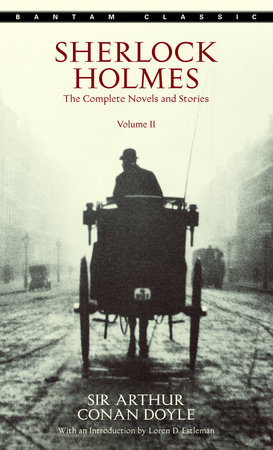
Sherlock Holmes: The Complete Novels and Stories Volume 2 by Sir Arthur Conan Doyle

(Book Review)

It's taken me far too long to get around to reading this book.

I actually bought this book 10 years ago now.

...wow.  10 years ago already.  It's scary how quickly time starts to pass as you get older.  It seems like it was just the other day.

I was in Fukuoka city with my friends John and Mary, on the same  trip I described in this May 2006 blog post.

English books are in short supply in Japan, so whenever we made it into a big city, we always hit the bookstores. The three of us were browsing through one such bookstore, when I saw the two volumes of the complete Sherlock Holmes.

Up until that time, my image of the Sherlock Holmes canon had been an image of a sprawling infinite array of stories.  No mortal could possibly dream of reading all of the Sherlock Holmes stories, anymore than it was possible to read, say, all of the Batman stories.

But now here before me, in two thick but portable volumes, were all the collected stories.  I could buy these books.  I could actually read through the entire collected canon.
It would be a huge step in my continuing quest to someday achieve the status of being "well-read".

"Imagine," I said to Mary, "I could actually buy these books and read through the whole Sherlock Holmes canon.  And then, the next time I'm at a bar, I could say to the person next to me, 'Did you know I've read all the Sherlock Holmes stories?' "
"What a sadly misunderstood man you are," Mary responded.

Well, buying the books was easy enough.  Reading through them proved to be another matter.

Not that these were bad books--not at all, they were very enjoyable actually.  But in this day and age of constant media distractions, finding the time and concentration to read even an enjoyable book can be difficult for some of us.

I finished the first volume of this collection, and reviewed it on this blog, way back in January 2007.  At that time I fully planned to just continue on to volume 2.  But I didn't.  I got distracted by several other books, and just never got around to coming back to this one.

Again, it's not that these books were bad.  (In fact, I even put the Sherlock Holmes stories from Volume 1 up on my list of "Classic Books Which Are Actually Fun to Read"). But I suppose that after working through the first volume, my curiosity was satiated, and I knew what to expect from a Sherlock Holmes book.  Whereas other unknown books now excited my curiosity more.

Eventually, however, I finally decided it was time to either come back and finish the job, or just admit to myself I was never going to get around to reading all the Sherlock Holmes books.  And so I picked up volume 2, and completed it over the last couple months.

Now, I can at last say to those guys at the bar, "Hey, did you know I've read all the Sherlock Holmes books?"
(Although now that I've actually read them all, I find I can remember very few of the stories from the first volume.  They've more or less all faded from my memory over the past 10 years.  Which perfectly illustrates the futility of reading just for the sake of becoming well-read.  You forget most of what you read over the years anyway, so what's the point?)

The Contents
The second volume contains the remaining four books in the Sherlock Holmes Canon.

The Hound of the Baskervilles (1902)

The Valley of Fear (1915)


His Last Bow (1917)


The Case Book of Sherlock Holmes (1927)


The Difficulties of Writing This Review
I am beginning to think it was a mistake to structure these reviews by the two volumes that the publishers (Bantam Classics) arbitrarily divided the canon into.
Either I should have reviewed each individual book separately, or I should have reviewed the entire collected edition as one whole.
While each individual story does have some unique aspects that could be commented on, simply lumping all of these books together into Volume 2 is going to produce the exact same sorts of generic comments about Sherlock Holmes that I already wrote about in my review of Volume 1.

...Well, too late now.  I already make the decision to separate these reviews by volume way back in January 2007.  Nothing for it now but to press on ahead.

The Review
Much of what I said in my review of Volume 1 holds true for Volume 2 as well.

I wrote in my review of Volume 1 that I was disappointed to discover that the reader did not get to solve the mystery alongside Sherlock Holmes.
Before I actually read these books for myself, I had previously thought that the appeal of these stories was a sort of intellectual puzzle in which the reader got to match wits against the detective. But this is not the case.  The reader does not have access to all the clues that Sherlock Holmes does, because the narrator of almost all of these stories is Doctor Watson.  Watson never notices any of the details that are crucial to solving the case, and Holmes keeps most of his observations to himself until the final scene, when he finally lets Watson (and the reader) know all of the clues they had missed out on.

But despite this annoyance, the stories are real-page turners nonetheless.
There's the simple appeal of having the mystery resolved.  The human mind can not stand an unsolved mystery.  Once an unresolved case is introduced to the reader, the reader's curiosity kicks into overdrive, and you find yourself staying up late continually turning pages until you find out what the answer is.  (Most of these stories are murder mysteries, but not all.  A number of cases are the "find out why my friend has been acting so strange lately" variety.)
This is true even if the author "cheats" by not giving the reader all the clues upfront (of which Arthur Conan Doyle is guilty).  There's still, nonetheless, a great satisfaction in seeing the mystery resolved.

This human desire to seek resolution is no doubt why mystery stories continue to be popular today even if they are more about shocking reveals then they are about intellectual puzzles--like the awful, but very popular CSI  franchise (W).

Once you're hooked into an individual mystery, it's easy to keep turning the pages until find resolution.  When working through a volume like this, however, the difficulty is getting yourself into a new story each time.  (2 of the 4 books contained in this volume are themselves collections of short stories, so in total there are 22 separate mysteries contained in this book.)  After you've just got done obsessing about one mystery, it's very difficult to convince yourself to care about a new mystery all over again.
My personal strategy was, after I finished one mystery, to force myself to get about 2 pages into the new mystery before bed.  Then the next morning, I had forgotten about the previous story, and would wake up curious to find out what was going to happen in the new story.

In this way I found the stories to be very pleasant reading.

Other Observations
As I said above, I'm not going to attempt a thorough review of each story.  But I will just jot down some random thoughts about thing that struck me.

*********************

I have always thought of Sherlock Holmes as part of Victorian Literature, but actually his career spanned several decades.  The first book (way back in volume one) was published in 1887, but volume 2 ends with a collection published in 1927.
The original 1927 author's introduction to The Casebook of Sherlock Holmes indicated that Sir Arthur Conan Doyle was becoming somewhat testy about the age of his character.  "decrepit gentleman who approach me and declare that his [Sherlock Holme's] adventures formed the reading of their boyhood do not meet the response from me which they seem to expect.  One is not anxious to have one's personal dates handled so unkindly."
Nevertheless, Arthur Conan Doyle showed a great reluctance to update his character for modern times.  Despite the publication dates of the later stories, almost all of them continue to be set during the 1890s.
It's this consistency that makes the few exceptions all the more interesting--such as His Last Bow (W), published in 1917, which features an aging Sherlock Holmes coming out of retirement one more time to defeat a German spy in a story set shortly before the outbreak of World War I.


*********************

Despite the fact that Arthur Conan Doyle cheats by not laying all the clues out before the reader, there's no denying these stories are pure brilliance and that Sherlock Holmes fully deserve his place in the literary canon.   The logic by which Holmes solves these cases is usually astoundingly clever.
It must take a very special kind of brilliant logical mind to come up with all these solutions.  That, combined with an ability to write good prose, and it's hard not to respect Arthur Conan Doyle as a special kind of genius.
(There are, however, one or two stories near the end of the canon which don't quite hold up to the usual level .  The Adventures of the Creeping Man, for example, was just absolutely ridiculous.  I don't want to spoil the ending here, but, just trust me, it's completely ridiculous.)


*********************

Much as I admire the literary genius of Sir Arthur Conan Doyle, there's a rather disturbing strain of xenophobia and classism that runs through these stories.  Anything that's not part of the British middle-class is usually portrayed as something to be distrusted and feared.
The unflattering portrayal of Germans in His Last Bow is probably understandable, since it was written during 1917.  Still, it is a bit much.  The story is set in 1914, before the war, and is all about the Germans' secret plans to attack Britain.  (In actuality, it was Britain that declared war on Germany in 1914).
No other nationality gets treated quite as harsh as the Germans, but none of them come off looking that good either.  South Americans come off as hot-headed and impetuous, Italians as corrupt.  America and Australia are both portrayed as a lands of violence and lawlessness.
Basically, anyone who's not British is pretty suspect.
And, most regrettable to report, dark skinned peoples are always described as ugly or hideous or monstrous.
(I don't remember this so much from Volume 1.  Possibly Arthur Conan Doyle got more xenophobic as he got older.  Or possibly I just don't remember it.  It has been 10 years after all.)
There's also a disturbing anti-union theme that runs all throughout The Valley of Fear.  But I'll get to that in the next section.

*********************

You've got to feel a little bit sorry for Arthur Conan Doyle.  He kept wanting to write other things besides Sherlock Holmes, and the public kept demanding more Sherlock Holmes.
The Final Problem (W), the infamous story in which Arthur Conan Doyle attempted to kill off Sherlock Holmes (only to eventually cave into public pressure to bring him back again) was way back in 1893 (way back in the Volume 1 edition I read 10 years ago).

Every time Arthur Conan Doyle thought he was done with Sherlock Holmes, the public just kept asking for more.
The 1917 book was even entitled The Last Bow.  And yet Arthur Conan Doyle would be persuaded to write 12 more stories for 1927's The Casebook of Sherlock Holmes.
The author's introduction to The Casebook of Sherlock Holmes is essentially two pages of Arthur Conan Doyle saying, "Okay, seriously you guys, it's 1927.  I've been writing these stories for 40 years now.  This is really the last book.  Seriously."

The idea that Arthur Conan Doyle wanted to branch out into other genres, but felt constrained by the demand for more and more Sherlock Holmes stories, is the only way I can think of to explain the bizarre second half of The Valley of Fear.  The second half of The Valley of Fear is an 80 page backstory (pretty much a whole separate novella in its own right) which is about labor unions and violence in a mining town in America.  It has nothing to do with Sherlock Holmes, is only very loosely connected to the main story, but it must have been a topic Arthur Conan Doyle wanted to explore.
Arthur Conan Doyle, unfortunately, portrays the mine owners and the Pinkertons as the forces of good, and the labor unions as the forces of pure evil.
The real story on which this was based was a lot more complex.

According to Wikipedia (W), The Valley of Fear was based on the real-life story of James McParland, a Pinkerton detective who infiltrated the Molly Maguires (an Irish American labor group which resorted to terrorism).
The real James McParland threatened to resign from the his job once he realized that thugs hired by the mine owners were much more vicious and violent than anything the Molly Maguires ever did, and that the information he provided had been used by these hired capitalist thugs to kill three men and two women in their house.

Now I wake up this morning to find that I am the murderer of Mrs. McAlister. What had a woman to do with the case – did the [Molly Maguires] in their worst time shoot down women. If I was not here the Vigilante Committee would not know who was guilty and when I find them shooting women in their thirst for blood I hereby tender my resignation to take effect as soon as this message is received. It is not cowardice that makes me resign but just let them have it now I will no longer interfere as I see that one is the same as the other and I am not going to be an accessory to the murder of women and children. I am sure the [Molly Maguires] will not spare the women so long as the Vigilante has shown an example.[9]  (Also from Wikipedia)

Now, there's the interesting story.   Which Arthur Conan Doyle completely missed in his effort to show the union as pure evil, and the mine owners as pure good.
But imagine what an interesting story the real story could have made.  In fact, I think this would be a great Hollywood movie--a story filled with moral ambiguity, as the Pinkerton detective starts out convinced of the righteousness of his cause, but suddenly realizes that he's not so sure he's on the right side after all.
Add James McParland to the list of Hollywood Biopics I want to see.

*************

Much as I enjoyed these stories, I did roll my eyes slightly as the way the narrator (usually Doctor Watson) introduces each story using the superlative.  Something along the lines of  "Of all the cases Sherlock Holmes ever solved, this one was by far the strangest of them all."
Holmes, for his part, will often say that the villain for that story is the cleverest man they have ever matched wits against.

Arthur Conan Doyle probably was able to get away with it, because these stories were all originally published separately in newspapers, and only later compiled into book form.
But when you're reading them all in one volume, you can't help but roll your eyes at it.  "Come on.  They can't all be the strangest story.  The villains can't all be the most diabolical."

**************

The Hound of the Baskervilles is considered by many to be the best Sherlock Holmes story.  Or at least, the spookiest mystery.  So I probably shouldn't close out this review without saying at least a couple words about it.

...Actually I don't really have anything to add to the praise that's already been given to that book.  Except to say I also enjoyed the spooky atmosphere of the lonely English moors covered with fog.  A masterfully spooky tale masterfully told.

*************

In my review of The Count of Monte Cristo, I observed that a lot of the "Classic Books" in the Western Literary Canon aren't so much great works of art as they are popular fiction that managed to stay popular through the years.

If that was true of Dumas, it's even more true of  Sherlock Holmes.  These were originally just detective stories that were serialized in pulp newspapers.  How did they come to be regarded as classics?

So, all the same questions I had about the literary value of Dumas still stands for Sherlock Holmes.  Are these books a waste of time, or are they worth reading simply because they are considered classics?  And what would Jonathon Jones make of these stories?

**************

The early Sherlock Holmes stories (those contained in Volume 1 of this collection) featured a very flawed hero.  He was brilliant, certainly, but he also had an overactive mind that he didn't know how to shut off, and if there was not a case to keep him occupied, he went a bit crazy.  He was also a substance abuser, who would use cocaine to stimulate his mind, and opium to help himself calm down.

That angle has been completely dropped by these later stories.  Aside from his tobacco habit, all of Sherlock Holmes's drug problems have disappeared.

**************

Connections With Other Books I've Read
I mentioned Pinkerton and his detective agency in my discussion of The Valley of Fear.  But the Pinkerton detectives also show up in The Adventures of the Red Circle.

The historical Allan Pinkerton and his detective agency were also featured in A World that Never Was, and Flashman and the Angel of the Lord.

The background to The Adventures of the Blanched Soldier is the Boer War, which I read about in The Scramble for Africa.

Other Related Posts

For my thoughts on some of the Sherlock Holmes movies, see: Young Sherlock Holmes,  Sherlock Holmes (the 2009 movie), and  Sherlock Holmes: Game of Shadows.

Also Sherlock Holmes featured as a minor character in the Anno Dracula series (of which I read the first - two books.)

It was perhaps unfair of me to say that Arthur Conan Doyle felt constrained by the popularity of Sherlock Holmes, because he did actually manage to write several other books during his lifetime.  Including one which I've reviewed on this blog: The Lost World.

Link of the Day
On the Economic War in Latin America

Thursday, January 22, 2015

Anno Dracula 1918: The Bloody Red Baron by Kim Newman


            So, after reading the original Anno Dracula, I have decided to continue on to the sequel: The Bloody Red Baron.
            These books will doubtless only appeal to certain readers, but I quite like them because it allows me to combine my interest in early modern history with my interest in pulp fiction.

            Set in the same universe as Anno Dracula (the universe in which Dracula defeated Van Helsing instead of vice-versa), this book takes place 30 years after Anno Dracula, during World War I.  Dracula is on the side of the Germans now, and there are vampires fighting on both sides of the war.

            Most of the same comments that I made about the first Anno Dracula also hold true here as well.  The fun of the book is a universe in which real historical characters are intermixed liberally with characters from many other stories.  So this novel features characters like Winston Churchill, Field Marshal Sir Douglas Haig, General Jack Pershing, Mata Hari and Manfred von Richthofen (the Red Baron) interacting with H.G. Wells’s  Dr. Moreau, Jules Verne’s Robur the Conqueror, Paul Baumer from All Quiet on the Western Front, Mycroft Holmes and his more famous brother Sherlock Holmes.
[There are also brief references to The Greyfriars (which I’m familiar with because of George Orwell’s critiques of The Greyfriars stories ) and to Harry Flashman, who is mentioned as a public school graduate of disrepute.]

Although at first glance it may seem quite bizarre to re-tell the story of World War I with vampires, it does actually fit once you start reading it.  Since World War I was already one of the most horrific wars (from the soldier’s point of view), the subject matter is already quite macabre to begin with.  And into the slaughter fields, where Europe killed off an entire generation of its youth, why not add in vampires to increase the horror of it?  (Although actually, although my local bookstore had this book shelved in their horror section, it’s actually much more fantasy/adventure than horror.)

The writing style is, once again, highly readable.  So if you’re interested in this kind of book, it’s recommended.

Other Notes
* As luck would have it, a co-worker of mine is reading a history of World War I right now, so we chatted about the subject.  “I just finished a book on World War I myself,” I told him.  “Well, World War I with vampires mixed in.  The premise is that it takes place in a world where Dracula was never defeated, and Dracula goes over to fight with the Germans.”
            “That’s just the sort of thing Dracula would do,” my friend immediately said.

Annotations
            The 2012 re-print edition (the edition I read) contains annotations at the back, where author Kim Newman explains the origin of a selective some of his characters and references.
            Personally, I would have preferred a more complete set of notes.  But as Kim Newman writes: “I’m not going to tag every borrowed, misappropriated or historical character, setting or bit of business. … I want some mysteries to remain.” (p. 551).  I find this frustrating, but I suppose this is his prerogative as the author.
            Similarly, Kim Newman writes, “Obviously, this is a fantasy novel—but much of the most unbelievable material in it is true; I have refrained from too many ‘yes this really happened’ and ‘my god, they actually said that’ notes.” (p. 551)  What a shame!  I really love those “yes this really happened” and “my god they actually said that” notes.  And I’m a bit puzzled by Kim Newman’s reluctance to include them here. 

            I am, however, sympathetic to the fact that Kim Newman is writing these annotations at a distance of almost 20 years from his original book.  This book was originally published in 1995, and as Kim Newman admits: “It has been a sobering experience to re-read the book and realise how much of my research I’ve completely forgotten.  In some cases, others will have more luck tracking down what or who I meant than I have. (I can completely identify.  I have the same experience re-reading my old under-graduate papers, which are also at about a distance of 20 years remove now.)

            The Bloody Red Baron is even more packed with borrowed names and characters than its predecessor.  Just about every page has some new name on it.  And just about every name in the book is a reference to real history or some other fictional work.
            But fortunately this is where Wikipedia really comes into its own, because the Wikipedia page for this book (W) contains a (complete?) list of the borrowed characters, historical and fictional, that populate The Bloody Baron.  And so it was from Wikipedia that I learned that the English fighter pilot Albert Ball (W) was actually a real person, and that the character “Red” Albright came from the Captain Midnight (W) radio show, or that the character Kent Allard came from The Shadow series (W).

            But that being said, there are still plenty of interesting notes in Kim Newman’s annotations.  For example, it was in Kim Newman’s annotations that I learned about Biggles (W), a character in The Bloody Red Baron that comes from a series of novels by W.E. Johns.  Kim Newman claims that at one time Biggles was hugely popular in British culture, and furthermore suggests, “It is possible that their [the Biggles novels] pre-eminent position in British culture was shot down by devastating parodies of Monty Python’s Flying Circus. (‘I don’t understand your banter’), which Michael Palin at least must have come to regret.” (p. 559)
            So then, of course, I had to look up on Youtube the Monty Python parodies of Biggles.  For example, “Biggles Dictates a Letter”


And the “I can’t understand your banter” skit (which doesn’t explicitly mention Biggles by name, but Kim Newman seems sure is indirectly parodying the Biggles books.)


And the Spanish Inquisition sketch, featuring “Cardinal Biggles”.


            (I have actually seen all of these sketches before, but enjoy them much more now that I know what they’re parodying.)

            And that is the whole joy of a book like this.  It’s constantly opening up new areas of interest for the reader.

Link of the Day 

Saturday, January 03, 2015

Anno Dracula by Kim Newman

(Book Review)

What is this Book About?
This is a very ambitious book which is juggling several things at once.  But I'll try to describe it as simply as I can.

At its most basic, this book is a take-off on Bram Stoker's classic novel Dracula, but one that asks the question: what would have happened if Dracula had won?

In the alternate universe of Anno Dracula, Bram Stoker's book was only true up until halfway through chapter 21: The scene in which the men discover Dracula forcing Mina to drink his blood.  In Bram Stoker's version, Dracula flees at this point, and is later hunted down and killed by the men. In Anno Dracula, Dracula attacks at this point, killing Van Helsing, Jonathon Harker, and Quincey Morris, forcing Jack Seward and Arthur Holmwood to flee, and turning Mina into a vampire.  Dracula then goes on to marry Queen Victoria, and to rule over England.

In the author's afterward, Kim Newman describes the origin of his interest in creating a world in which Dracula had won.  He identifies the 1897 Dracula as part of the invasion literature popular in Britain in the 1890s.  (In this case, Dracula representing a one-man invasion of Victorian England.)  In the case of Bram Stoker's original book, Dracula's plans for ruling England are foiled by Van Helsing.  However, the common structure of the invasion literature (W) of the time was to imagine England being conquered and ruled by a foreign power.  It was only a natural extension of the genre to wonder what the book would have been like if Dracula had actually succeeded in his plans and England was brought under a vampire government.  As Kim Newman himself writes:

...at some point .... it occurred to me that there might be story potential in an alternative outcome to the novel in which Dracula defeats his enemies and fulfils his stated intention to conquer Britain.  It still seems to me something of a disappointment that Stoker's villain, after all his meticulous planning and with five hundred years of scheming monstrousness under his cloak, had no sooner arrived in Britain than he trips up and sows the seeds of his eventual undoing by an unlikely pursuit of the wife of a provincial solicitor.  Van Helsing describes Dracula's project in Britain as to become 'the father or the furtherer of a new order of beings, whose road must lead through Death, not Life'.   Yet Stoker allegorises Dracula's on Britain entirely as an attack on the Victorian family, an enblem of all the things he prized and saw as fragile.  It struck me as an interesting avenue to explore the kind of England, the kind of world, which would result if Van Helsing and his family of fearless vampire killers were defeated and Dracula was allowed to 'farther and further' the new order.  (Author's Afterward p. 450-451)

However, what makes Anno Dracula more interesting than a simple good versus evil story is that it turns out not all vampires are necessarily evil.  The politics of the vampire ruled Victorian England are complex because in Dracula's England, vampires become an accepted alternative life-style, and many English people willingly choose to become vampires without losing their original conviction. Dracula himself is still evil, but a lot of the new vampires in England are just as diverse as the humans.  There are vampire nobles and vampire beggars, vampire police and vampire criminals,vampire monarchists and vampire republicans.

In this new society of humans mixing with vampires, the surviving characters from the original Bram Stoker novel make vastly different choices.  Arthur Holmwood eventually decides to make his accommodation with the new government, becomes a vampire, and even becomes a protege of the new vampire prime minister.  But Jack Seward quietly continues his crusade against vampires by going out at night and secretly killing vampire prostitutes.  These seemingly random murders of vampire prostitutes become a media sensation, and Jack Seward becomes the "Jack the Ripper" of this alternate universe.

But what makes Anno Dracula particularly fun (if you're enough of a geek to go in for these things) is that the author uses the book as a playground for all sorts of borrowed characters from other Victorian novels who also live in this alternative universe along with real historical figures, like Queen Victoria, Oscar Wilde, and Lewis Carroll.  From Dr. Jekyll and Mr Hyde is imported Dr. Jekyll (and later Mr. Hyde as well).  From the Fu-Manchu stories comes the evil doctor Fu-Manchu.  From Oliver Twist comes Bill Sykes.  From H.G. Wells's stories comes Dr. Moreau and Griffin.    From The Prisoner of Zenda comes Rupert of Hentzau. From King Solomon's Mines comes Allan Quatermain.  From The Lost World comes the character of Lord John Roxton.  From the Sherlock Holmes stories come Mycroft Holmes, Moriarty and Colonel Moran.(Sherlock Holmes himself is mentioned, but otherwise absent from the story, interred in a prison camp for Dracula's enemies.  As the author explains in the afterward, "the reason Holmes is removed to a concentration camp in Anno Dracula is to get around a problem with many Holmes/Jack the Ripper stories--the great detective would have identified, trapped and convicted the murderer before tea-time." (p.429))

[Although some of these characters have bigger roles than others.  Dr. Jekyll, Colonel Moran, Mycroft Holmes, and Rupert of Hentzau all have decently big roles in this book, but some of these other characters, like Lewis Carroll and Allan Quatermain, are limited to only a brief reference in the text.]

My History with the Original Dracula
Since this book directly follows on the events in Bram Stoker's Dracula, I should probably write briefly about my history with the original book.  As a kid, I read a few different abridged versions of Dracula  before finally reading the complete original book back in 2001.  (I cheated slightly--I did it as an audio book.)  More recently, I've been using the graded reader version of Dracula a lot with my young learner classes.The graded reader version is of course heavily abridged, but it did at least help to keep the characters fresh in my mind.
I mention this because some familiarity with Bram Stoker's original book is probably necessary to completely enjoy Anno Dracula.  At the very least, you should probably know who the characters Jack Seward and Arthur Holmwood are before starting this book.

Why I Read This Book
So, you do have to be somewhat of a geek to get into the whole premise of this book (a huge mash-up off all the pulp fiction characters from the Victorian era.)  But, since I am already a big geek, and since I have a particular interest in the Victorian era history and literature, I was completely on board for a book like this.  
I forget how I first heard about this book.  I stumbled upon some book review recommending it somewhere, and ever since then I've kept one eye out for it every time I walked into a bookstore.  In Cambodia, particular books are always hard to find.  But now that I'm back in the US for the holidays, I was able to grab a copy with no problem.

The Review
This is one of those books that isn't really necessary to review because the book reviews itself.  Once you know the premise, you're either in for this story, or you're out.  Readers should do a fairly good job of self-selecting themselves.
So if an extension of the Dracula story combined with a mash-up of Victorian literature appeals to you, then you can count yourself in.  The only question left to be asked is: how well does the book pull it off?

And the answer is: pretty good.
The story-telling aspects of the book at least are excellent.  It's highly readable prose.

There's a few different mysteries boiling away in this novel.  The central mystery (Who is Jack the Ripper?) is already known to the reader from the first chapter.  (The book is told both from the perspective of vampire killer Jack Seward, and from the perspective of the police agents hunting him down, so the reader can sympathize with both sides.)  However, in addition to the vampire murders, there seem to be several outside forces who are manipulating events.  And these outside forces are left mysterious all the way until the last chapter, when suddenly everything is revealed and makes perfect sense.
The denouement, when it finally arrives,  is superb, but until you get to the last chapter there are a few different plot threads that don't really make sense, and some patience is required on the part of the reader, as well as some trust that the author knows what he's doing.  That patience and trust, however, will pay off at the end.

The borrowed characters from other novels are kept mostly to the periphery of the story.  This is somewhat disappointing in one respect, but in another respect probably for the best.  Most authors have trouble handling in a natural way characters borrowed from other authors.  Borrowed characters can't grow and change as organically as new original characters.  And too much on-stage time for all of the borrowed characters would probably have smothered this story.
Thus, in Anno Dracula, the main characters are all original creations, and all the borrowed characters are minor.  Dr. Jekyll, for example, will feature in a few key scenes, but then fade away from the story, allowing the original characters to take the focus.  (The exception of the characters borrowed from Dracula itself, Arthur Holmwood and Jack Seward, both of whom are major players in this book.)

I'm not sure I found the premise of the book entirely believable.  Obviously in fantasy books, you have to give the original premise a bit of space.  (I believe the literary term for this is "suspension of disbelief.")  So, obviously, you'd have to allow for a world in which vampires are real, and in which all these classic characters from literature all exist in the same universe.
But even granting all that, I found it unbelievable how quickly English society had changed to accommodate the new vampire order.  In the book, the resistance to the new vampire order is portrayed as being largely at the outskirts of society, and much of upper-class England had embraced vampirism as an alternative life-style.
I might have gone along with this if Dracula's invasion had happened 100 years before, but I couldn't believe this huge change in society could have happened in only the few short years depicted in the novel.
So, I just had to add this to the list of things I was suspending my disbelief on.  Not only did I have to accept that in this world vampires existed, but I had to accept that in this world British society immediately into embracing vampirism as soon as Dracula married Queen Victoria.  Once I allowed for all this, then the rest of the novel played out very logically within this set-up.

Other Notes
* This book was originally published back in 1992, but the reprinted 2011 addition contains numerous extra goodies including an afterward, an alternative ending, a screenplay, some musings on the connections between Dracula and Jack the Ripper, and annotations.
I found the annotations the most interesting.  The author Kim Newman throws in all sorts of Victorian era characters into the book, famous as well as obscure.  I knew who major characters like Sherlock Holmes and Dr. Jekyll were, but there were several other character references I would have missed completely if it weren't for the annotations in the back.
For Flashman fans, the experience is similar to reading a Flashman book--there's the main story, and then there's all the notes in the back that flesh out the history behind the story.  Half the fun of any Flashman book is always the footnotes in the back, and the same is true of the annotations at the back of Anno Dracula--only in this case, the reader learns more about Victorian literature instead of about history.

* There are three more novels in this series (W), which follow this alternate Dracula universe through various events in the 20th century.  I'm not sure I'm going to follow this series through till the bitter end, but I'm going to at least read the next book in the series, since it deals with another of my historical interests, World War I.  The next book is called The Bloody Baron.

* Through Phil, I've discovered Steve Donaghue over at openlettersmonthly.com.  Steve has given this book a very favorable review over at his website here.

Link of the Day
Language and Other Cognitive Processes

Sunday, April 14, 2013

Sherlock Holmes: Game of Shadows

(Movie Review)

            Despite the fact that I gave a mixed review to the first Sherlock Holmes movie, on the whole I really enjoyed the sequel.  (I’m going to have to revisit that first movie one of these days--I may have just been in a cranky mood when I wrote that review.)

            Robert Downey Jr. and Jude Law are both great actors with lots of charisma. Robert Downey Jr. in particular does a great job in this—every scene he’s in is really fun to watch.
           
            Furthermore, as someone who’s read at least half of the Sherlock Holmes canon, I enjoyed all the references to the books.  I liked the appearance of Mycroft Holmes, Professor Moriarty, and Jack “Tiger” Moran.  And I got a little thrill as soon as the camera revealed a waterfall in Switzerland, and I realized I knew exactly what was going to happen next.
           
            All in all, a very entertaining film.
            Of course I do have a few nitpicks…

Notes:
Action Sequences

* The Sherlock Holmes books were never overly focused on the action.  (Occasionally a bad guy would attack, but Arthur Conan Doyle usually summed up the fight in a sentence or two.)
            But I understand that movies are a more visual medium, and that you have to throw in more action sequences to keep the audience entertained.  And I’m not complaining about that at all.  I like a good fight scene as much as the next red-blooded movie viewer.
            The first couple action sequences were well-choreographed and fun to watch. I enjoyed the long chase/fight sequence that took place in the casino.
             But then things just started getting over the top—thinking specifically about the fights in the train and in the German armory. 
            Don’t get me wrong--a bit of fisticuffs and swashbuckling is all right in these movies, but the massive machine gun battles and huge explosions seem more suited to a Die Hard movie, and out of place in a 19th century detective story. 
            I suspect some executive in Hollywood refused to greenlight this movie unless there were a couple big over the top explosions, but the movie didn’t really need it.
            Worse, it brought down the intelligence level of the movie.  The core story of a covert battle of wits between Sherlock Holmes and Moriarty, being played underneath the radar of 19th century European diplomacy, was appealing by itself. But this premise lost all believability once huge explosions and machine gun battles on public trains are taking place. 
            (It also loses all sense of proportion.  The initial purpose behind the train battle was simply to kill Doctor Watson and his wife.  Surely there are easier ways of doing this.)

Connections with Flashman
          This movie ties in nicely with the Flashman book I just finished reading, Flashman and the Tiger.  Jack Moran is the principle villain in that Flashman story, and he’s Moriarty’s number 2 man in this movie.
            Also, it’s a smaller point, but Flashman and the Tiger makes brief reference to the 1889 suicide of the Austrian prince Rudolph.  In the movie, newspaper clippings about this suicide appear briefly on Sherlock Holmes’ wall of crimes connected to Moriarty.

And Other History Connections
          Well I’m on the subject, a couple more history facts.  Although one does not expect historical accuracy from this type of movie, it’s worth pointing out that they did get a couple things correct: In the 1890s there really was a lot of tension between French and Germany, and in the 1890s, there really was a wave of anarchist bombings in Europe

            I never really expect the anarchist movement to be portrayed sympathetically by capitalist Hollywood, but it must be admitted the portrayal here could have been worse.  The anarchists in the movie were misguided, weak, and easily manipulated by Moriarty, but at least they were not pure evil.

            That being said, did I miss something, or did the whole anarchist plot line in this movie make no sense at all?  If Moriarty’s whole plan is to create a war between France and Germany, then why did he pay the anarchists to take credit for the bombings?  Wouldn’t that defeat the whole purpose?  The French government is not going to go to war with Germany if it believes the explosions were caused by French anarchists.

Stephen Fry
          Via my British friends in the expat circles, I’ve become aware of how popular Stephen Fry is over in England.  He seems to be regarded as both a comedian and intellectual over there. (And I enjoyed him in Black Adder). So any time he appears in a Hollywood movie, it always catches my eye. 
            However, the screenwriters did have a hard time figuring out how to effectively use him.  The one gag—that he walks around naked all the time and doesn’t seem to realize this is socially unacceptable—didn’t really strike me as all that funny.
           
            (Bonus link—see this video of Stephen Fry and Christopher Hitchens debating whether the Church has been a force for good or evil [LINK HERE]).

Link of the Day
Noam Chomsky US, a top terrorist state

Sherlock Holmes: Game of Shadows: Movie Review (Scripted)